Nestled at the southern end of the Malay peninsula, Singapore may be easily overlooked due to its small size. However, this city-state has emerged as a major economic force and serves as the de-facto financial hub of Southeast Asia.
In the past, Singapore was a relatively poor and obscure nation, but it has transformed into a remarkable global success story. As of 2023, it boasts the 7th highest GDP per capita worldwide.
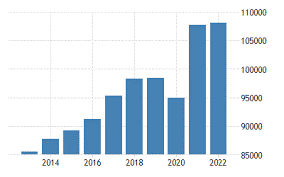
Since gaining independence in the 1960s, Singapore has consistently achieved impressive economic growth, with an average annualized growth rate of 7.5%. This sustained development has propelled Singapore to its current status as a thriving and dynamic economy.

Dubbed Southeast Asia’s financial center, Singapore plays a crucial role in the region’s economic landscape. While Asia as a whole encompasses numerous countries spanning from the Middle East, Japan, Singapore, and Hong Kong stand out as the key financial hubs, with Singapore serving as the gateway to Southeast Asia and Hong Kong as the gateway to Greater China.
Singapore holds a vital position in channeling venture capital, skilled workforce, and advanced technology into the Southeast Asian region. This region includes rapidly growing markets such as Vietnam, Indonesia, and the Philippines, offering significant opportunities for businesses and investors.
When establishing an account with a bank or brokerage firm in Singapore, you gain more than just access to the city itself. You also gain the ability to trade in the nearby frontier markets of Asia. These emerging markets often offer superior growth prospects compared to Singapore, but they can be challenging to access directly. Many of them require personal visits or even residency before you can open an account and invest in stocks. By going through Singapore, you can easily trade stocks across the financial markets of Southeast Asia.
Furthermore, it is noteworthy that Singapore has surpassed Hong Kong in various aspects, including private equity and wealth management. This further solidifies Singapore’s position as a prominent financial hub in the Asian region.
%20%E0%B9%83%E0%B8%99%E0%B8%AA%E0%B8%99%E0%B8%B2%E0%B8%A1%E0%B8%9A%E0%B8%B4%E0%B8%99%E0%B8%8A%E0%B8%B2%E0%B8%87%E0%B8%87%E0%B8%B5%20(Changi%20Airport)%20%E0%B8%AA%E0%B8%B4%E0%B8%87%E0%B8%84%E0%B9%82%E0%B8%9B%E0%B8%A3%E0%B9%8C%20(Singapore).jpg)
Starting a business in Singapore
Starting a business in Singapore is a straightforward and favorable process, as the country is renowned for its business-friendly environment. It consistently ranks among the top countries in the World Bank’s Ease of Doing Business Index since 2006.
Singapore has fostered an attractive ecosystem that facilitates business operations, contract enforcement, property registration, access to credit, tax compliance, and international trade.
To begin, there are five different types of entities available for incorporation in Singapore: sole proprietorships, partnerships, limited partnerships, limited liability partnerships, and private limited companies. Private limited companies, limited liability partnerships, and sole proprietorships are particularly advantageous for maximizing tax benefits.
Here is an overview of the steps involved in incorporating a company in Singapore:
- Obtain approval for your proposed company name from the Accounting and Corporate Regulatory Authority (ACRA).
- Prepare the necessary registration documents.
- Register your Singaporean company with the ACRA to finalize the setup.
During the incorporation process, you will need to provide personal documents such as your passport. Foreign investors are warmly welcomed and encouraged to establish companies in Singapore.
Corporate income tax in Singapore is set at a competitive rate of 17%. The city-state also offers tax incentives for new startups, and certain industries may benefit from special tax exemptions.
If you are considering doing business in Singapore, it is worth noting that there is an article discussing whether Singapore will continue to be the best place for business in the future.
Currency
The official currency of Singapore is the Singapore Dollar (SGD), with an exchange rate of approximately 1.35 SGD to 1 USD as of mid-2023.
The SGD is among the top fifteen most traded currencies globally and is considered a reliable hedge against other major international currencies.
Our analysis highlights several reasons why the SGD is regarded as one of the safest currencies in Asia. Singapore’s prominent role as a financial hub for banking and wealth management ensures a sustained demand for the currency. Additionally, factors such as Chinese capital flight and robust export numbers contribute to the long-term strength of the Singapore dollar, which is already displaying an upward trend.
When seeking secure alternatives in Asia, few currencies can match the stability of the Singapore Dollar. Despite some recent depreciation, if one had purchased and held SGD since the early 2000s, they would have achieved a gain of over 20% against both the Euro and USD today.
Investing in assets denominated in SGD provides assurance against market volatility, as the Singapore Dollar remains one of the most stable currencies in Asia and the world.
Singapore stock markets
Singapore boasts one of the most developed and competitive financial markets globally. As a top equity market in Asia, the Singapore Exchange (SGX) hosts nearly 800 listed stocks.
In the Global Financial Centers Index, Singapore secured the sixth position as a competitive financial center in 2020. The SGX, established in 1999, operates different divisions for its various business operations, including electronic trading, derivatives trading, securities trading, derivative clearing, AsiaClear, Reach, and Central Depository Pte Ltd.
Singapore offers a wide range of tradable securities, including stocks, exchange-traded funds (ETFs), business trusts, leverage and inverse products, real estate investment trusts (REITs), structured warrants, and American depository receipts. The derivatives market covers commodities such as coal, electricity, iron ore, oil, petrochemicals, and rubber, as well as equities, equity indexes, freight, interest rates, and foreign exchange (FX). Notably, Singapore handles the highest volume of Forex trading among all Asian financial centers.
Investors can access Singaporean companies through index funds and Singapore stock listings on both US and international markets. Leading brokerage firms like Fidelity and IB offer access to Singapore exposure ETFs and individual stocks. Major Singaporean companies listed on US exchanges include Asian Pharma, DBS Bank, Singapore Airlines, Singapore Telecommunications, Jardine Matheson, and United Overseas Bank. While some equities are sold over the counter, others have primary or secondary listings in the US.
Opening a brokerage account directly in Singapore provides several advantages, including lower brokerage fees and access to stock markets across Southeast Asia. Investors can trade stocks in markets such as Thailand, Malaysia, Indonesia, Vietnam, and the Philippines. This allows for greater diversification and exposure to emerging and frontier markets that are poised for substantial growth.
Moreover, due to Singapore’s global economic reach, a Singapore brokerage account also enables investors to access markets in Japan, China, Europe, and beyond.
Growth in Singapore’s Economy
Singapore’s remarkable development and industrialization since its independence in 1963 have propelled it to achieve one of the fastest growth rates in history, averaging 7.5% annually. While the pace of growth has slowed in recent years, Singapore’s GDP still expanded at an impressive average rate of 5.4% over the past decade, a remarkable feat for a developed economy.
To put this into perspective, the United States experienced an average GDP growth rate of 2.1% during the same period, while the European Union only surpassed 1%.
While the manufacturing sector has faced some recent challenges, Singapore’s strength lies in its ability to innovate and adapt to changing market conditions. The city-state has excelled in producing high-value goods that occupy less physical space, such as pharmaceuticals and refined petroleum, which is particularly crucial considering Singapore’s limited natural resources.
Several industries thrive in Singapore, including telecommunications, banking, manufacturing, tourism, and transportation. The city-state is also a significant player in electronics manufacturing, oil refining, chemicals, biomedical sciences, mechanical engineering, casino gambling (second-largest market globally after Macau), and oil-rig production and repair.
In terms of trade, Singapore’s major imports consist of petroleum, diamonds, gold, and copper, while its major exports include refined petroleum, diamonds, gold, refined copper, and raw tin.
Looking ahead, Singapore is poised to sustain its growth and maintain its position as one of Asia’s primary financial hubs, alongside Hong Kong. Its ability to adapt, innovate, and leverage its strengths will continue to drive its success in the global business landscape.
Investing in Real Estate in Singapore
Singapore’s real estate market is renowned for being one of the most expensive in the world, primarily due to limited land supply and high demand. To manage this, the government has implemented various cooling measures, such as increasing transfer taxes and imposing restrictions on multiple home buyers and foreign investors.
Foreigners and multiple home buyers are subject to at least 25% higher taxes compared to other buyers. However, foreigners are still permitted to own condominium units in Singapore with a freehold title. With government approval, they can also purchase and own houses, bungalows, and properties under six stories tall. Generally, ownership is likely to be approved if it benefits Singapore’s economy.
In certain areas of the city-state, finding developers willing to sell freehold condos may require more effort. Many properties in prime locations, like the Central region, are sold on a long-term leasehold basis as developers prefer to retain these valuable real estate assets. Consequently, those who do manage to find a freehold property should expect to pay a premium.
Despite the high prices, purchasing property in Singapore is relatively straightforward due to the country’s efficient systems and the prevalence of English as the official language, eliminating the need for translation services.
It’s worth noting that Singapore has a dual housing market consisting of subsidized and non-subsidized housing. As the real estate market is costly, the government subsidizes a significant portion of housing for its citizens. Foreigners are not eligible to purchase subsidized housing, which is reserved for Singaporean citizens and Permanent Residents (PRs).
Investing in Singapore’s real estate can be pricy but potentially profitable. Rental yields are typically low, ranging from 2% to 3%, but capital appreciation is almost guaranteed due to Singapore’s status as a global financial hub. Continued population growth ensures sustained demand, while the scarcity of land will inevitably limit supply, further driving property values.
Is Investing in Singapore Worth It?
Singapore, known as the Lion City, continues to be an attractive destination for investments and business ventures. Over the years, it has established itself as a highly successful investment hub.
Considering the prolonged growth and development of Singapore, one might wonder if there is still room for further appreciation in its stock and real estate markets.
While some argue that the prime investment window may have passed, with the country becoming expensive and well-established, it is important to note that there are still numerous viable investment opportunities in Singapore today, albeit perhaps fewer than in the past.
If you have any questions about investing in Singapore, investing if you live in Singapore ir want some financial advice, please read some of my blogs first and contact me using the button below or through the Contact page.
Read other blogs similar to this one:
- Singapore Retirement Scheme – Contributing as an expat
- Wealth Management for U.S Expats in Singapore
- Saxo Bank vs Other Platforms Review