Interactive Brokers stands apart from the other platforms covered in this review series. Rather than operating as an insurance-based investment bond or traditional adviser-led platform, it is a direct-access global brokerage designed for investors who want extensive control, low trading costs and access to markets around the world. It is arguably one of the most sophisticated and cost-effective investment platforms available to individual investors, while also maintaining a strong regulatory framework across its global operations.
This review examines Interactive Brokers’ reliability, regulatory structure, investment range, pricing and overall suitability for different types of investors. Particular attention is given to internationally mobile and high-net-worth clients who may want to manage their investments independently or use the platform alongside professional investment advice.
Founded in 1978 by Thomas Peterffy, a pioneer of electronic trading, Interactive Brokers has spent more than four decades developing its global brokerage infrastructure. The company was listed on NASDAQ in 2007 and has grown into a major international brokerage, serving millions of clients across more than 200 countries and jurisdictions, with hundreds of billions of dollars in client assets.
Its scale, technology and global market access have made Interactive Brokers one of the leading choices for experienced investors who prioritise flexibility, transparency and cost efficiency over simplicity and hand-holding.
If you’d like to contact me, you can reach me through my contact page or you can view my investment management services to understand how we help expats.
Interactive Brokers: Key Features
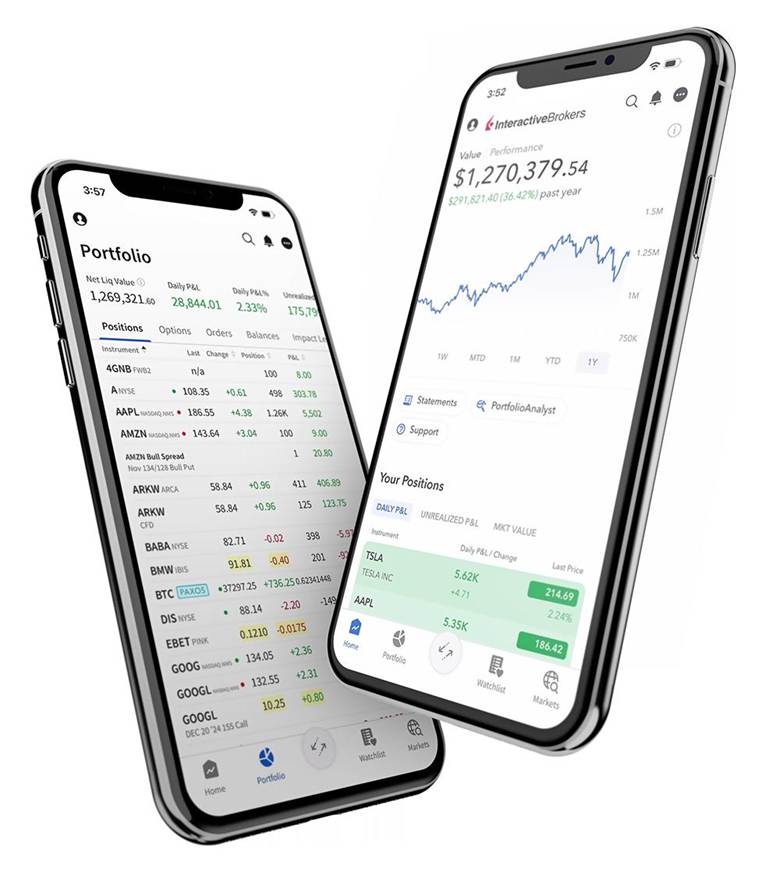
Interactive Brokers operates under the supervision of some of the world’s leading financial regulators, including the SEC and FINRA in the United States, the FCA in the UK, MAS in Singapore and ASIC in Australia, alongside regulators in other jurisdictions. This broad regulatory framework provides a high level of oversight and investor protection.
Interactive Brokers Group, Inc. is publicly listed on NASDAQ under the ticker IBKR, meaning the company is subject to the financial reporting, auditing and corporate governance requirements expected of a publicly traded business. This provides an additional level of transparency compared with privately held investment platforms.
The company maintains a substantial capital position, with significant equity and excess regulatory capital, providing considerable financial strength. Client assets are also held separately from the company’s own corporate assets, meaning they are legally segregated from Interactive Brokers’ balance sheet.
One of the platform’s biggest advantages is its global market access. A single account provides access to more than 150 markets across over 30 countries, with the ability to invest in stocks, ETFs, bonds, options, futures, foreign exchange and other securities. Clients can also hold and trade in multiple currencies, making the platform particularly useful for internationally mobile investors who may earn, hold or invest money in different currencies.
Costs are another major advantage. Interactive Brokers is known for its very competitive trading commissions, tight spreads and institutional-style foreign exchange pricing. US stocks and ETFs can be traded with $0 commission in certain circumstances, while currency conversion costs are generally among the lowest available to retail investors. There are also no traditional custody fees, inactivity fees or minimum account requirements, making the platform cost-effective across a wide range of portfolio sizes.
The platform also provides access to portfolio lending and margin facilities, allowing eligible clients to borrow against their investment portfolios. This can provide additional liquidity without requiring investments to be sold, although borrowing against investments introduces additional risk and is only appropriate where carefully managed.
With millions of clients and hundreds of billions of dollars in client assets, Interactive Brokers has developed into one of the largest global brokerage platforms available to individual investors. Its combination of scale, technology, market access and pricing makes it particularly attractive to experienced investors and internationally mobile clients.
For clients introduced through our firm, we can also provide professional portfolio management alongside the Interactive Brokers infrastructure. This means the client retains the advantages of the Interactive Brokers platform while benefiting from professional oversight of the investment portfolio.
We are appointed as the External Asset Manager (EAM) on the Interactive Brokers account. In this capacity, we act as the designated investment manager and provide ongoing professional oversight of the portfolio, including portfolio construction, asset allocation, rebalancing, risk management and investment reporting. All investment decisions and portfolio activity are carried out in accordance with the agreed investment mandate and are designed around the client’s risk profile, objectives and investment timeframe.
This structure combines the flexibility and institutional-style pricing of Interactive Brokers with professional investment management. The client therefore retains access to a highly comprehensive global investment platform while having a professional manager responsible for the ongoing management and monitoring of the portfolio.
Overall, Interactive Brokers is arguably one of the most comprehensive and cost-effective direct investment platforms available to international investors. It is particularly well suited to sophisticated investors who value global market access, low costs, multi-currency capability and flexibility, while the addition of professional EAM management can make the platform more suitable for clients who do not want to manage the portfolio themselves.
| Feature | Interactive Brokers | Saxo Bank | Swissquote |
| Overall platform | Excellent | Excellent | Very good |
| Professional trading | Excellent – TWS is designed for experienced and active traders | Excellent – SaxoTraderPRO is professional-grade | Very good |
| Ease of use | Good – powerful, but more complex | Excellent – probably the easiest of the three | Very good – relatively straightforward |
| Global market access | 170+ markets | 120+ exchanges | Strong global access |
| Stocks and ETFs | Excellent | Excellent | Excellent |
| Bonds / fixed income | Excellent | Excellent | Very good |
| Options | Excellent – extensive global options access and advanced analytics | Excellent | Good |
| Futures | Excellent | Excellent | Good |
| Forex | Excellent – institutional-style FX execution | Excellent | Very good |
| Multi-currency investing | Excellent | Excellent | Excellent |
| Charting | Excellent – highly customisable | Excellent – particularly user-friendly | Very good |
| Technical analysis | Excellent | Excellent | Very good |
| Fundamental research | Excellent – extensive third-party research | Excellent – strong integrated research | Good to very good |
| Portfolio analysis | Excellent | Excellent | Very good |
| Risk management | Excellent – Risk Navigator, margin analytics and related tools | Excellent – strong integrated risk tools | Good |
| Order types / execution tools | Outstanding – 100+ order types and algorithms | Excellent – advanced and algorithmic orders | Good |
| Algorithmic trading | Outstanding | Excellent | Good |
| Level 2 / market depth | Excellent | Excellent | Good |
| Mobile platform | Very good – IBKR Mobile and GlobalTrader | Excellent – SaxoTraderGO | Very good |
| Desktop platform | Outstanding – TWS / IBKR Desktop | Excellent – SaxoTraderPRO | Very good |
| API / automation | Outstanding | Very good | Good |
| Paper trading/simulation | Excellent | Available | Available, depending on account type |
| Research and investment ideas | Excellent | Excellent | Very good |
| Professional portfolio management | Excellent infrastructure, but primarily a brokerage | Very good | Very good |
| Banking services | No traditional banking proposition | Bank licence | Swiss banking platform |
| Best for | Experienced and professional investors | Sophisticated investors who want usability | Investors who want banking and investment services |
| Overall | 9.5/10 | 9/10 | 8/10 |
Is Interactive Brokers Reliable?
Interactive Brokers (IBKR) is one of the world’s largest and most established electronic brokerage firms. Founded in 1978 and listed on NASDAQ, the company serves more than two million clients across more than 200 countries, with hundreds of billions of dollars in client assets. Its clients range from individual investors to family offices, investment advisers, hedge funds and institutional investors.
A major strength of Interactive Brokers is its regulatory framework. The group operates through regulated entities across major financial centres, including the United States, UK, Singapore, Australia, Canada, Ireland and Hong Kong. Client assets are segregated from the company’s own assets, providing an important layer of protection should the business itself experience financial difficulties. Depending on the jurisdiction, clients also benefit from statutory investor compensation schemes and additional insurance arrangements.
The company also maintains a substantial capital base and operates with conservative risk controls. Combined with its long operating history, public financial reporting and extensive regulatory oversight, this makes Interactive Brokers one of the more financially robust brokerage platforms available to international investors.
The Interactive Brokers Platform
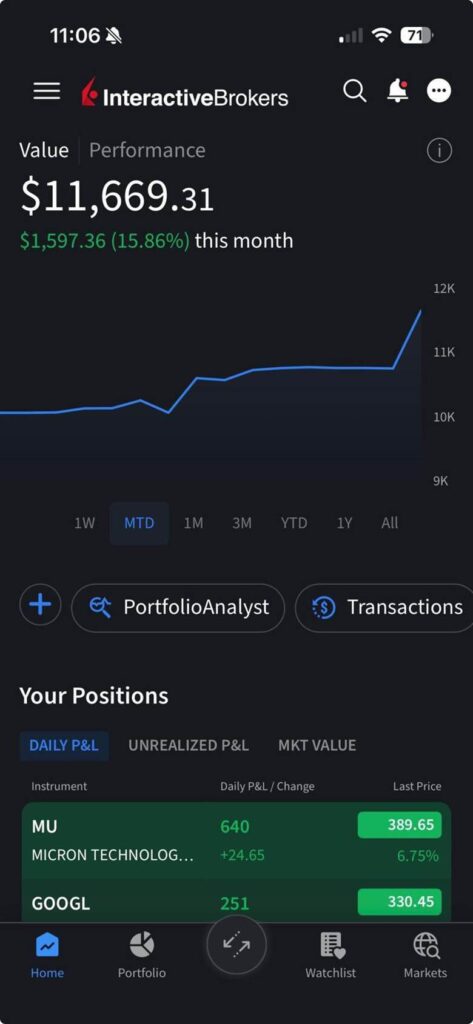
Interactive Brokers offers considerably more than a basic investment account. Its flagship Trader Workstation (TWS) is designed for experienced investors and provides advanced charting, extensive order types, portfolio analytics, options tools, risk management and access to multiple asset classes from a single platform.
For investors who want something simpler, IBKR GlobalTrader provides a more streamlined mobile experience, while the web-based Client Portal allows clients to manage accounts, view statements, monitor portfolios and execute trades without installing specialist software.
The platform also provides extensive research and analytical tools, including stock and bond screeners, options analysis, portfolio risk analysis and detailed performance reporting. Its SmartRouting technology is designed to seek competitive execution across available trading venues.
Global Investment Access
One of Interactive Brokers’ biggest advantages is the breadth of investments available through a single account. Clients can access stocks and ETFs across major developed and emerging markets, alongside bonds, government securities, futures, options, foreign exchange, mutual funds and selected structured products.
This global access is particularly useful for internationally mobile investors. A client can hold multiple currencies and invest across US, European and Asian markets without needing separate brokerage accounts in each country. The platform also provides access to institutional-style foreign exchange pricing, which can be particularly valuable when moving larger amounts between currencies.
For more sophisticated investors, Interactive Brokers also provides access to options, futures, margin lending and other advanced investment facilities. These features are not necessarily required by most long-term investors, but they demonstrate the depth of the platform and explain why IBKR is widely used by professional and institutional investors.
Interactive Brokers Fees and Pricing
| Cost | Interactive Brokers | Swissquote | Saxo Bank |
| Annual custody/platform fee | 0% | Generally 0% on some jurisdictions/accounts; varies by jurisdiction | 0.08%–0.12% p.a. for stocks, ETFs and bonds in UK accounts |
| Account minimum | None | Varies; some accounts from CHF 500 | None |
| US shares | From $0.005 per share on IBKR Pro, $1 minimum | Typically from around 0.1%, depending on jurisdiction | From around $1 minimum |
| UK shares | Around 0.05%; minimum applies | Around 0.1%, depending on jurisdiction | From around £3 |
| European shares | From around 0.05%, depending on exchange | Around 0.1% | Generally around 0.08%+, depending on market and tier |
| ETFs | Very low commissions; exchange-dependent | Around 0.1% in relevant international pricing | From around 0.08% |
| FX | Very low, institutional-style pricing | Competitive, but generally higher than IBKR | Around 0.20%–0.60%, depending on tier |
| Bonds | Competitive, depending on exchange and market | Competitive | From around 0.20%; minimums apply |
| Options | From around $0.15–$0.65 per US contract | Available; pricing varies | Available; pricing varies |
| Margin/lending | Among the lowest | Competitive | Competitive |
| Inactivity fee | None | Varies by jurisdiction | None |
| Platform fee | None | Varies | None |
| Multi-currency | Excellent | Excellent | Excellent |
| Overall cost | Lowest | Medium | Medium |
Interactive Brokers is particularly competitive on cost. International clients will generally use the IBKR Pro pricing structure, which provides access to institutional-style pricing rather than the commission-free IBKR Lite service that is primarily aimed at US clients.
Trading commissions vary depending on the market and security, but US equities can be traded at very low per-share rates, while UK and European shares are generally charged at around 0.05%, subject to minimum commissions. Options and futures are charged on a per-contract basis, with pricing varying according to the exchange and trading volume.
One of the biggest advantages is the lack of traditional platform charges. There is no custody fee, inactivity fee, platform fee or minimum account balance. This makes Interactive Brokers particularly attractive for larger portfolios where even a relatively small annual platform charge can become significant.
Foreign exchange is also a major strength. Clients can hold and convert multiple currencies at highly competitive rates, with FX pricing based closely on institutional market rates rather than the wider spreads often applied by traditional banks and wealth platforms. For internationally mobile investors regularly moving between GBP, USD, EUR and other currencies, this can make a meaningful difference over time.
Interactive Brokers also offers portfolio lending and margin facilities to eligible clients. Borrowing against an investment portfolio can provide liquidity without selling investments, with rates generally considerably lower than traditional bank lending. However, margin borrowing introduces additional investment risk and should only be used where appropriate.
Advantages of Interactive Brokers
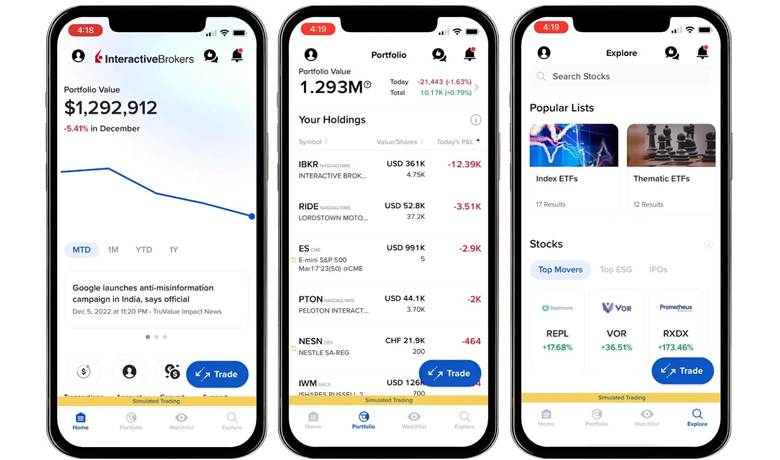
The biggest advantage of Interactive Brokers is the combination of cost, security and investment choice. The company operates under extensive regulatory supervision, has a long operating history and maintains a substantial capital base, while client assets are segregated from the firm’s own assets.
Costs are also extremely competitive. There are no custody or inactivity charges, no minimum balance and no lock-in period or surrender penalties. Investors retain the ability to buy, sell, transfer or withdraw their investments without the contractual restrictions often associated with insurance-based investment products.
The investment universe is another major advantage. A single account can provide access to markets across the US, Europe, Asia and emerging markets, covering equities, ETFs, bonds, foreign exchange, options, futures, mutual funds and other investments. For an internationally mobile investor, having this breadth of investments and currencies within one account is particularly valuable.
The technology is equally comprehensive. The Trader Workstation platform provides professional-level trading, portfolio analysis and risk-management tools, while SmartRouting is designed to seek competitive execution across available trading venues. This level of functionality is one reason Interactive Brokers is widely used by professional investors and institutions.
Disadvantages of Interactive Brokers
The main weakness is also one of its strengths: complexity. Interactive Brokers provides an enormous amount of functionality, but the platform can be intimidating for investors who have little experience with financial markets. It is fundamentally designed as a professional brokerage rather than a simple wealth-management account, so clients who want a highly guided service may prefer a traditional adviser-led platform.
Unlike an offshore investment bond or insurance-based product, Interactive Brokers does not provide a tax-deferral wrapper or an integrated succession-planning structure. Investment income and capital gains are generally treated according to the investor’s normal tax position, and clients need to consider their own tax and estate-planning arrangements separately.
The platform is also less suited to investors looking for a packaged regular savings product. While investors can make regular contributions themselves, Interactive Brokers does not provide the same structured savings-plan approach offered by some insurance-based providers.
Customer service is another consideration. IBKR is not a high-touch private banking service, and support can be less personal when dealing with complex queries. This is less of an issue when the account is supported by a professional investment manager, but it can be frustrating for investors who expect a dedicated relationship manager.
Cryptocurrency availability also varies between jurisdictions and is more limited than specialist crypto platforms.
Interactive Brokers vs Competitors: How Does It Compare?
Interactive Brokers sits in a slightly different category from many of the platforms covered in this review. It is primarily a global brokerage designed for investors who want direct access to markets, extremely competitive pricing and a high degree of control. Other platforms are more focused on adviser-led investing, insurance wrappers, pension structures or providing a simpler investment experience. As a result, the “best” platform depends heavily on what the investor is actually trying to achieve.
Interactive Brokers vs Saxo Bank
Saxo Bank is probably the closest direct competitor to Interactive Brokers. Both provide extensive global market access, multi-currency accounts and professional trading technology, and both are suitable for investors who want to manage substantial portfolios across international markets.
The main difference is the overall philosophy of the platforms. Interactive Brokers is heavily focused on cost efficiency, market access and professional-level functionality. Saxo generally provides a more polished and intuitive user experience, making it easier for investors who want sophisticated investment capabilities without the same level of complexity.
Saxo also operates as a bank, which may appeal to clients who place particular importance on having a banking relationship and the associated deposit protection arrangements. Interactive Brokers, meanwhile, operates as a brokerage and provides investor protection through the relevant regulatory and client-asset segregation arrangements in each jurisdiction.
For a highly experienced investor who trades regularly, holds multiple currencies or wants the lowest possible overall trading and FX costs, Interactive Brokers would generally be my preference. For an investor who wants a sophisticated platform but places greater importance on ease of use and a more traditional banking-style experience, Saxo is a very credible alternative.
Interactive Brokers vs Ardan International
Ardan International is fundamentally different from Interactive Brokers. Ardan is an adviser-led investment platform designed around professionally managed portfolios, fund investing and long-term wealth planning. It is particularly relevant to international clients who want an investment platform that can sit alongside wider financial planning and estate-planning arrangements.
Interactive Brokers, by comparison, is a direct-access brokerage. It provides access to individual shares, ETFs, bonds, options, futures and foreign exchange across global markets, giving investors considerably more control over exactly what they own and how trades are executed.
For a client who simply wants a professionally managed portfolio of funds and ETFs and does not want to trade directly, Ardan can be a better fit. It provides a more traditional adviser-led experience and can be incorporated into wider wealth structures.
For an experienced investor who wants to buy individual securities, trade ETFs directly, hold multiple currencies and keep platform costs as low as possible, Interactive Brokers is the stronger option.
This is therefore less a question of which platform is better and more a question of whether the client wants a wealth-management platform or a global brokerage.
Interactive Brokers vs Utmost, RL360 and FPI
Utmost International and RL360 operate in a completely different part of the market. These are primarily insurance-based offshore investment solutions rather than direct trading platforms.
Their main attraction is the insurance wrapper and the planning opportunities that can come with it. Depending on the investor’s circumstances and country of residence, an offshore bond can provide tax-deferral features, facilitate certain estate-planning arrangements and allow investments to remain within a long-term insurance structure. These features are not available through a standard Interactive Brokers account.
Interactive Brokers is much simpler from an investment perspective. You own the underlying investments directly rather than holding them within an insurance wrapper, and there are generally no surrender periods or long-term contractual commitments.
For someone who simply wants to invest efficiently and maintain maximum flexibility, Interactive Brokers is usually the cleaner solution. For someone with substantial assets who is considering long-term tax planning, succession planning or a move between different tax jurisdictions, an offshore bond may have advantages that a brokerage account cannot provide.
The two solutions can also work alongside each other. For example, an investor might use an offshore bond for assets intended for long-term wealth and succession planning while maintaining an Interactive Brokers account for direct investment, ETFs, individual shares and more active portfolio management.
Interactive Brokers vs Novia Global and Morningstar Wealth Platform
Novia Global and Morningstar Wealth Platform are closer to Ardan in that they are designed primarily around adviser-managed investment portfolios rather than direct trading.
They can be particularly useful for UK expatriates who need access to structures such as pensions and other tax wrappers, depending on their circumstances and eligibility. They also provide an adviser-led environment where portfolio construction, investment selection and administration can be handled professionally.
Interactive Brokers does not try to replicate this. It is essentially a global investment account rather than a comprehensive UK wealth-planning platform. It provides far greater direct market access but does not provide the same range of pension and tax-wrapper structures.
For an expat with an existing UK pension who needs to consolidate pensions, manage retirement assets and receive ongoing financial planning, Novia or Morningstar may be more appropriate for that part of the portfolio. Interactive Brokers can then be used separately for non-pension investments where global market access and low costs are the priority.
Which Platform Is Best for Which Investor?
For a professional or experienced investor, Interactive Brokers is arguably the strongest overall option. Its combination of global market access, very competitive trading and FX costs, multi-currency functionality and sophisticated investment tools makes it particularly attractive for investors who understand markets and want control over their portfolio.
For a high-net-worth investor who wants professional management but also wants direct access to global investments, Interactive Brokers can work particularly well when combined with an External Asset Manager. This removes much of the complexity for the client while retaining the underlying advantages of the brokerage.
For an investor who wants simplicity, Saxo or an adviser-led platform may be preferable. Interactive Brokers gives you almost every tool imaginable, but that also means there is more to understand.
For an investor primarily interested in long-term tax and estate planning, an offshore bond through providers such as Utmost, RL360 or FPI may be more appropriate, particularly where the investor’s tax circumstances make the insurance wrapper valuable.
For someone building a pension or requiring UK-specific tax wrappers, platforms such as Novia Global or Morningstar may have advantages that Interactive Brokers cannot provide.
For a DIY investor with a smaller portfolio, Interactive Brokers is particularly attractive because there is no requirement to pay a traditional annual platform fee or meet a large minimum investment. However, the investor needs to be comfortable making their own investment decisions.
My Personal Verdict on Interactive Brokers
Having used Interactive Brokers myself, I have a very positive view of the platform. In my opinion, it is one of the best brokerage platforms available for an experienced investor who wants genuine global market access, very competitive costs and complete flexibility over how their portfolio is invested.
I personally use Interactive Brokers more as a trading and investment platform rather than as my primary wealth-planning structure. The ability to access global equities, ETFs, bonds, currencies and other investments from one account is extremely useful, particularly when dealing with larger portfolios and multiple currencies. The costs are also a major attraction. There are no traditional platform or inactivity fees, while trading and FX costs are highly competitive. IBKR’s published pricing currently starts from very low per-share commissions for IBKR Pro, with no account minimums, and its FX pricing is based around institutional-style rates.
For me, however, the biggest consideration is that Interactive Brokers is a professional brokerage, not a wealth-planning solution. It gives you the tools to invest, but it does not attempt to provide the wider tax, estate-planning and succession structures that can be important for internationally mobile and high-net-worth investors. The platform is also extremely comprehensive, which means it can be unnecessarily complicated for someone who simply wants to invest a portfolio and leave it alone.
This is why I think Interactive Brokers works particularly well when used as part of a broader wealth strategy rather than automatically being used for everything. For example, I would be comfortable using Interactive Brokers for the more liquid and actively managed part of a portfolio, where I want direct access to ETFs, individual shares, bonds and global markets. For longer-term assets where estate planning, succession and the structure around the investment are important, an offshore platform such as Ardan can serve a different purpose.
In that respect, I don’t see Interactive Brokers and Ardan as necessarily competing products. They solve different problems. Interactive Brokers is excellent at providing low-cost, flexible access to investments, while an adviser-led offshore structure can be more appropriate where the client wants professional management combined with longer-term wealth and estate planning.
Who I Would Recommend Interactive Brokers To
I would generally recommend Interactive Brokers to an investor who understands investments, has a reasonable level of financial sophistication and wants control over their portfolio. It is particularly attractive for higher-value portfolios where small differences in trading, FX and platform costs can become meaningful amounts of money over time.
It is also very well suited to internationally mobile investors. Being able to hold multiple currencies and access markets around the world through one account is a major advantage for someone who may live in one country, earn in another currency and invest globally.
For a client who wants to actively manage investments, trade individual securities, use ETFs extensively or take advantage of global market opportunities, I would put Interactive Brokers near the top of the list.
Who I Would Not Recommend It To
I would be more cautious about recommending Interactive Brokers to someone who wants a simple, completely hands-off investment experience. If the client does not understand investment terminology or does not want to make decisions about asset allocation, trading and risk, the flexibility of IBKR can become a disadvantage rather than an advantage.
Likewise, I would not automatically use Interactive Brokers for every client simply because it is cheap. If the primary objective is tax planning, succession planning, pension structuring or creating a long-term insurance-based investment structure, a platform such as Ardan or an offshore bond may be more appropriate.
My Overall View
Overall, I rate Interactive Brokers extremely highly as a brokerage platform. I particularly like it for its low costs, global access, multi-currency capabilities and the sheer range of investments available. The fact that the platform does not charge traditional custody or inactivity fees also makes it very attractive for investors who want to keep ongoing costs under control.
However, I would not describe it as the perfect platform for everyone. Its strength is that it gives sophisticated investors an enormous amount of flexibility; its weakness is that it requires a degree of sophistication to use that flexibility properly.
My preferred approach is therefore to look at Interactive Brokers as one component of a wider wealth strategy. I use it as a trading and investment platform where direct market access and low costs are the priority, while an adviser-led structure such as Ardan can be used where longer-term holding, professional portfolio management and estate-planning considerations are more important.
For the right investor, that combination can be considerably more effective than trying to force the entire portfolio into one platform. It allows each structure to do what it is best at, while keeping the overall investment costs relatively low and maintaining a high degree of flexibility.
In simple terms: Interactive Brokers is one of the best places I would put money to work, but it isn’t necessarily the best place to structure all of your wealth. For an experienced investor, I think it is difficult to beat on cost and investment flexibility; for a client who needs more comprehensive wealth and estate planning, I would look at how IBKR fits alongside, rather than instead of, those structures.
Blogs I have written that you will find interesting: