Having lived in Bangkok for nearly nine years, I thought that I would write about some of the pros and cons of living in Bangkok and Thailand in general, to give a perception of what my thoughts are regarding living in the country and certain pros and cons that people might want to consider before moving to Bangkok or Thailand.
This is my own opinion, so it’s very subjective. For reference points, I have lived in Beijing, Saigon, and Manila and come from the U.K.
The People and Safety
You see articles today about the U.S. and the U.K. being “unsafe.” For example, friends tell me now that in London you can’t wear a nice watch and that the police are not attending every crime. Meanwhile, in my experience in Bangkok, I have never felt unsafe due to crime. I have never been robbed and have heard of very few crimes. Crime does infrequently happen, and I hear about it in tourist areas or in “seedy places,” but if you are living your life, crime is almost obsolete in Bangkok, in my experience.
Convenience of Bangkok
Bangkok boasts some of the most impressive shopping malls in Southeast Asia. These aren’t just shopping centres; they’re exquisite microcosms of entertainment, dining, and leisure. The city seems to have a mall every 500 meters, from the luxury of Iconsiam to the uniqueness of Terminal 21.
I am not a big mall fan, but it’s good to have the convenience if ever you need it. I find it useful to have international shopping with the likes of Tops market can find food from back home and many international foods.
In terms of medical care, I’ve found this to be great. It is a medical tourism hub for a reason. Having had several visits and check-ups at the hospital, I’ve found the service in mid to high-end private hospitals (of which Bangkok has many) to be exceptional.
Do you want to go to the pharmacy on Sunday? No problem. While it seems in Europe that everything closes at 6 p.m. and on Sundays, the total opposite is true of Bangkok. You have a 7/11 every 100 meters, food delivery apps, and Grab to get around. The ease of living is great. Convenience doesn’t stop at shopping and eating out. Bangkok is a hub for travel within the country. For example, if you want to get away to Hua Hin for a weekend at the beach or spend a weekend in the mountains, it’s all very accessible from Bangkok. Travelling within the region is cheap and accessible, with two international airports and metro lines connecting to both. It’s easy to get away for the weekend in Southeast Asia. From a personal perspective, we have a chef who cooks for us, and options like this are feasible in Bangkok at a reasonable price, unlike in the West.
A Culinary Wonderland
Sure, this comes up on most people’s lists as one of the world’s top cities for food, whether it’s street food or Michelin-star dining; it has it all. Personally, when I came to Bangkok in my 20s, I spent most of my time eating street food and in food courts. You can get cheap food that can be delicious. However, as I have aged, I’ve found myself eating healthier and have found this transition very simple with a wide array of options that are not so prominent in many other Southeast Asian cities, such as Saigon and Manila. There are many vegan restaurants and vegan groups. But if you are looking for international food, in my opinion, it boasts some of the world’s best Japanese food outside Japan due to the large Japanese diaspora in Bangkok.
Parks and Recreation: Green Oases Amid Urban Hustle

Despite the city’s whirlwind pace, Bangkok’s parks offer tranquil respites. The addition of new forest parks with facilities like free basketball and pickleball courts has enriched the urban environment tremendously. These spaces have become my sanctuaries, where the pulse of the city fades into the background. For those looking for green space, Bangkok may seem to lack in this department. However, you have some great parks in the city, such as Lumpini and the forest park in central Bangkok.
The Comfort of Condos
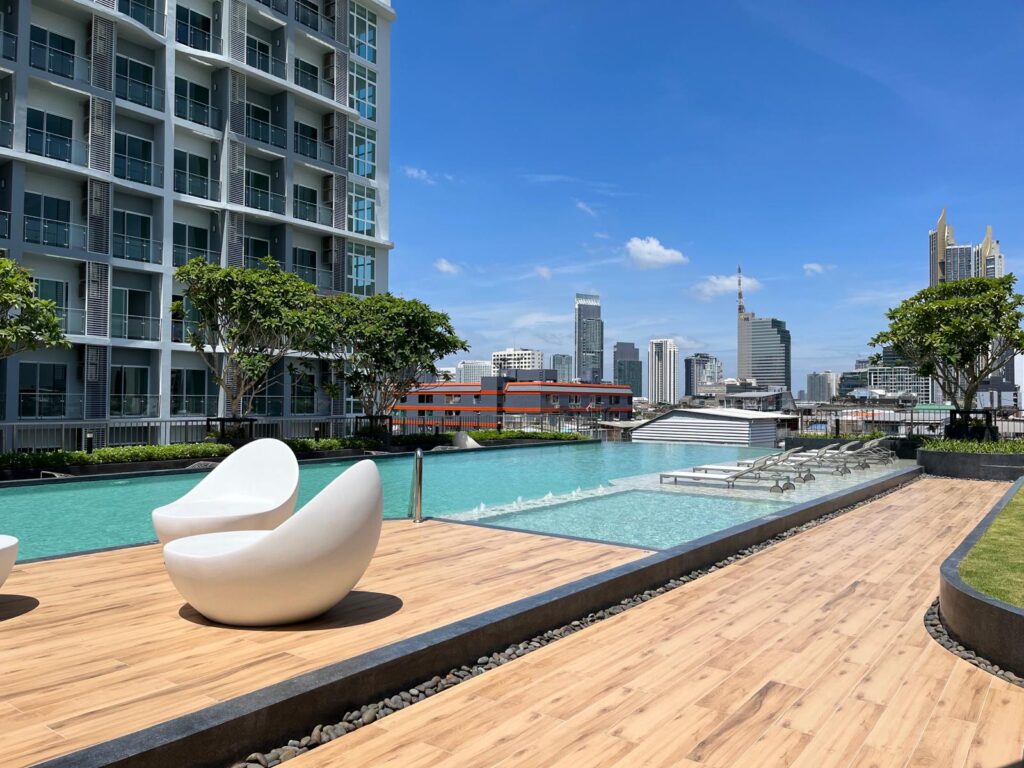
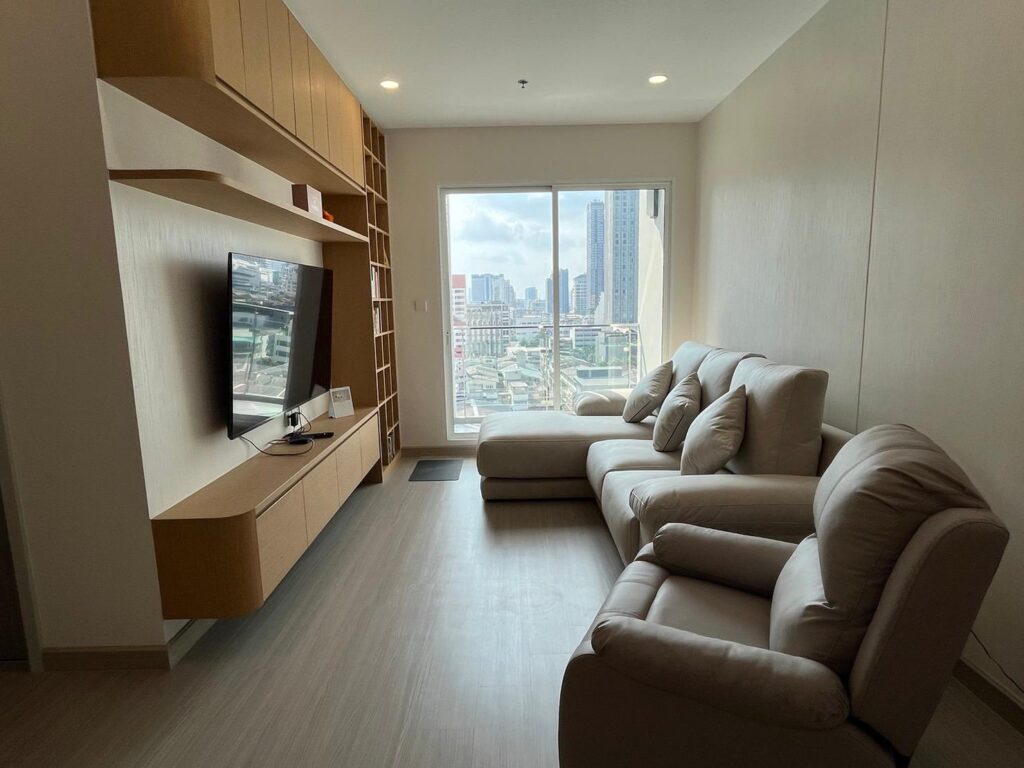
The downside of condos is that unless you are getting an older place, they can be quite small in central Bangkok.
But, as you have so many choices in terms of options, they will mostly have places open for everyone if you have the budget.
The plus side is that the facilities that come with the condos are fantastic, as you usually have gyms, pools, and other fancy amenities. However, in my experience, don’t get sold on all the facilities; a gym and pool are enough for most people. In terms of cost, it varies massively and suits most budgets.
I am sure you can find a place for $200 a month if you want, that’s not near a BTS and a small studio, while at the opposite end of the spectrum, you could find a place for $20,000+ a month at the Ritz Carlton. I don’t think rent is as cheap as people believe if you are considering a per-square-meter price for a moderate upper middle class in the city centre in a modern condo, but is still a lot cheaper than Singapore, Hong Kong and other major western cities. For example, I live in an 84 sqm condo that’s new and with nice facilities in the Bang Rak area (central Bangkok). It would cost around $2,000 a month to rent. This would be classified as an upper-middle-class place for a single person. Sites like Numbeo give you an idea of the rental cost.
Traffic
This is notorious in Bangkok. You need to select where you live to navigate the traffic. For example, I now live where everything is within a 2 km radius of my house and near public transportation, such as the MRT/BTS. This is a problem if you want to travel in the city by car, especially during peak hours. Don’t try to fight this; just pick your location wisely so you don’t have to travel by car. Hand in hand with this is the pollution; if you are looking for Switzerland-like air year-round, you will not get it in Bangkok. However, I will say that air pollution, for most of the year, is not a problem. It’s only for a few days in the dry season when I have found pollution levels to be unhealthy to go outside and exercise.
The Walking Dilemma
Bangkok is not inherently pedestrian-friendly. This is what I have found to be a negative, as the streets are not made for walking. They have random signs in the middle of the sidewalks, coupled with uneven paths and the heat and smell. Bangkok is not a very walkable city. Although, as stated above, you can find some great parks, and in the central or more popular areas, the streets are becoming cleaner. For someone who likes walking, this has been a problem, as I often find myself walking on the rooftop. Although it has a nice view, it’s not the same as walking freely on a country road. I have spoken to many expats who also find this to be one of the downsides.
Endless Opportunities for Activities
You have everything in Bangkok, whether you want to go to the ballet, attend an art show, or join a sports club. Bangkok has most things happening, and I have found this to be a great aspect of living here. I like to run and have found several running clubs, and playing hockey is also an option in Bangkok.
Language Barrier
This can be a challenge, and I found it more problematic at the start of my time in Thailand when I was quite new to the country and didn’t speak much Thai. Apps such as Grab (Southeast Asia’s Uber) were not so prominent. It can still be a challenge when opening bank accounts. But with technology, and if you learn elementary Thai, I have found that this opens up the options you have. I would encourage people who are looking to live in Thailand to learn basic Thai.
Summing up Bangkok and Thailand
In terms of places to live, I would rate it among the top cities in the world for those looking for a vibrant life with confidence on a moderate budget ($2,500-$10,000 a month for a comfortable lifestyle for a single person). In terms of other cities, I would only think of Kuala Lumpur if you are looking for a more relaxed pace of life in a major city, and Singapore if you are looking for a non-frictional life with a budget and the best of everything. However, I think Bangkok offers more options to get out of the city for day trips.
In my experience, living in Bangkok is mostly positive. It does, like any place, have its challenges, such as traffic. But what you get is worth it for me, and I would encourage anyone who wants to try it out to live in Bangkok for a few months and try different locations in the city, as your experience can vary massively depending on your location.
Other blogs which will help you:
- New Tax Laws in Thailand 2024: Implications and Strategies for Expats
- The Path to Permanent Residency in Thailand
Thailand remains an attractive destination, but new tax regulations introduced in 2024 mean that all foreign-sourced income (such as UK dividends, rental income, or pensions) brought into Thailand by tax residents is now subject to Thai Personal Income Tax. To manage this effectively, many UK expats utilise offshore investment structures or “Structured Notes” to maintain capital growth outside of the Thai tax net. Consulting with an expat financial specialist is essential to ensure you are utilising the UK-Thailand Double Taxation Agreement to avoid being taxed twice.
While Thailand is known for affordability, a high-standard lifestyle in areas like Bang Rak or Sukhumvit requires a higher budget. For a modern 80sqm+ condo, international healthcare, and private dining, a single expat should budget between £2,000 and £4,500 ($2,500–$5,500) per month. This budget provides access to world-class amenities, premium fitness centres, and frequent regional travel, while still being significantly more cost-effective than comparable lifestyles in London, Singapore, or Hong Kong.
Yes, you can receive your UK State Pension while living in Thailand. However, it is important to note that Thailand is not currently a country where the UK State Pension is “upped” (indexed) each year. This means your pension remains frozen at the rate it was when you moved or first claimed it. Because of this, many expats choose to transfer their private or frozen UK pensions into a SIPP (Self-Invested Personal Pension) or QROPS to gain better control over currency fluctuations and investment growth to offset the lack of state pension indexing.