
A surge in interest rates could serve as a trigger for a stock market rally.
The recent upswing in interest rates has significantly influenced financial markets lately. This surge is primarily driven by a reevaluation of expectations for the Federal Reserve’s future policies. Fed commentary has dampened market sentiment, suggesting that monetary policy will remain restrictive for a longer duration than initially anticipated by investors.
The perspective that the Fed would exercise caution in addressing inflation. Therefore, it isn’t a surprise that the policy rate may stay elevated for an extended period.
Figure: Source Seeking Alpha stock market returns vs Interest rate correlation
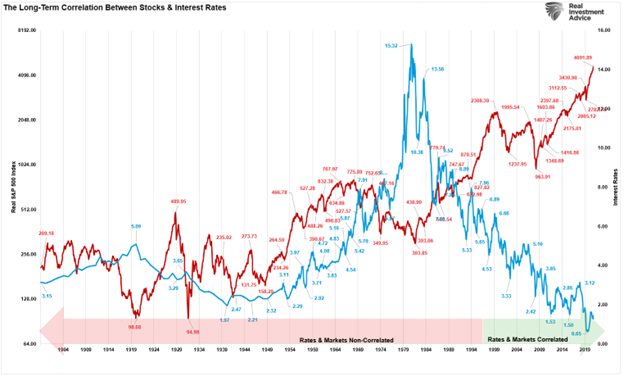
The Fed might need to implement further tightening measures at this stage. Instead, to curb inflation the FED may look for additional time rather than additional rate hikes. In essence, the Fed’s current stance might be more about signaling than taking substantial action.
Nevertheless, this signaling has pushed interest rates higher and caused stock prices to decline. This could lead to a buying opportunity in equities.
The 10-year Treasury yield briefly exceeded 4.6% last week, marking its highest level since 2007. After nearly fifteen years of historically low-interest rates, this upward movement has caused some unease. However, we’ve observed that episodes of rising rates have previously acted as favorable catalysts for stock market rallies over the past year and a half. Notably, previous peaks in the 10-year yield occurred in June and October of the previous year, as well as in March of the current year, and were followed by robust gains in equity markets in the subsequent months.
Importantly, the current inflation environment is more favorable than in previous instances. Last year’s rate hikes coincided with rising inflation, whereas today, inflation is on a sustainable (though potentially uneven) downward trajectory. Admittedly, longer-term yields have risen more than initially anticipated. Nevertheless, with consumer price pressures moderating and the Fed’s tightening campaign approaching its conclusion, there’s an argument to be made that rates are nearing their peak for this economic cycle. Consequently, if inflation continues to subside, and economic momentum weakens in the coming months, a decline in rates could set the stage for a year-end stock market rebound.
While rising rates have put pressure on stock returns, historical evidence suggests that peaks in 10-year yields have often triggered stock market rallies.
The third quarter’s challenges often pave the way for a stronger fourth quarter.
Figure: September is the worst month historically for the stock market source believes the market
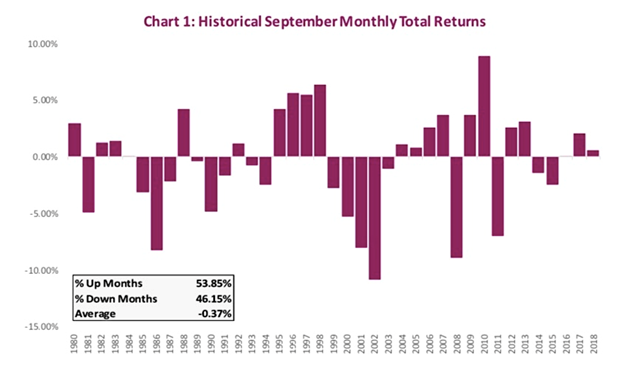
September witnessed a downturn, with the S&P 500 experiencing a nearly 5% decline. This decline was exacerbated by rising interest rates and concerns that a more stringent Federal Reserve policy might dampen economic growth, causing both the Nasdaq and Russell 2000 indexes to shed nearly 6% during the month. This resulted in an overall 3% drop for the S&P 500 for the third quarter, marking its first quarterly loss in a year.
This September dip in stock performance has become somewhat of a recurring trend, with stocks declining in September for the fourth consecutive year. However, historical data suggests that the market’s performance typically improves following weak third quarters. Over the past three decades, in the 11 years when stocks declined in the third quarter, the S&P 500 rebounded with gains in the subsequent fourth quarter on nine occasions, averaging an impressive return of 10.6% during the final three months of the year.
While fourth-quarter returns tend to be higher following third-quarter declines, it’s worth noting that the fourth quarter has traditionally been a strong period for stocks, with an average quarterly increase of 5% dating back to 1990. The most recent instance of a down fourth quarter was in 2018, with an average fourth-quarter gain of 9.5% recorded from 2019 to 2022.
Despite the market’s recent pullback, it’s important to recognize that the current dip has not mirrored the heightened volatility experienced during previous episodes. The VIX index, often referred to as the “fear index,” has risen in September but remains well below the levels observed during previous selloffs in March, December, and October. Moreover, the number of days with significant daily market moves (greater than 1%) has been lower in the past two months compared to earlier this year and the same period last year.
Lower volatility doesn’t necessarily indicate that market weakness won’t persist, but it may signify a more orderly pullback in which risks, such as potential Federal Reserve policy missteps and political disruptions, are more apparent and balanced by positive factors like a healthy labor market, declining inflation, and robust corporate profits.
Recent market movements have illustrated this equilibrium, including a notable swing on a recent Friday. The day began with a strong rally driven by a favorable inflation report, indicating the first drop below 4% in the core personal consumption expenditure price index (core PCE) in over two years. However, this rally faded as the day progressed, with concerns over a potential government shutdown over the weekend likely contributing to the market’s Top of Form.
What I would buy right now
Money markets to make the most of the short-term interest rates and the yield curve inversion while it lasts at or near 5% this would be a prudent move for medium-risk investors or long-term investors who are unsure where to put money to work right now. For the first time in a long time, they are yielding real returns above inflation.
I have spoken in previous blogs as the FED/ECB/BOE do start the rate-cutting cycle to expand the duration in Investment grade bonds going for 2-5 years at the belly of the curve and locking in coupons and getting higher bond prices with inverse relationship with interest rates. But don’t think this will need to be done for another few months.
Some money markets ETFs:
SPRXX – Fidelity Money Markets
https://fundresearch.fidelity.com/mutual-funds/summary/31617H201
In the equity market, it’s a bit more of a challenge to see much value presently. That is why personally like the option of money markets.
However, they still like established profitable companies in certain sectors. One sector that hasn’t performed too well is the healthcare sector YTD in the U.S. market which I am optimistic about.
Figure: Simply Wall Street U.S equities by sector YTD 1/10/2023
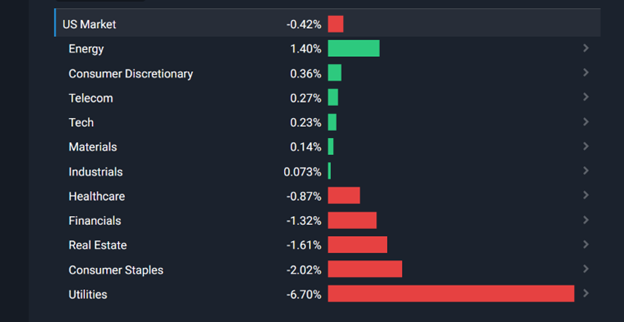
Health care not only broadly speaking has high profit margins, in a defensive sector. Benefiting from the macro level from an aging population, looking to live healthier for longer and from a technological one is at the forefront to benefit from AI in biotechnology.
I see this as a potential option in the equity market for investors looking for long-term exposure to get into the sector.
Figure: Source Simply Wall Street showing the U.S market breakdown of health care sectors YTD performance 1/10/2023
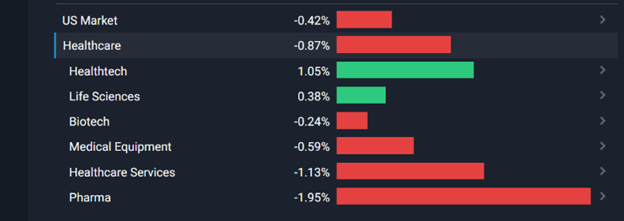
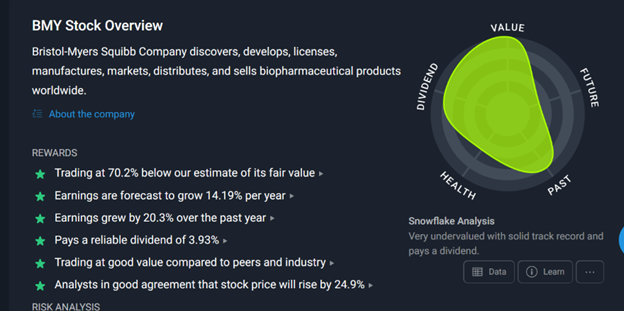
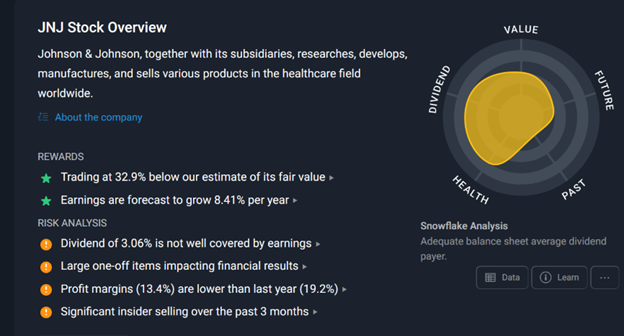
On a granular level personally, I like companies such as JNJ, and BMS from a value perspective.
Figures: BMS, JNJ simply Wall Street snowflake 1st Oct 2023
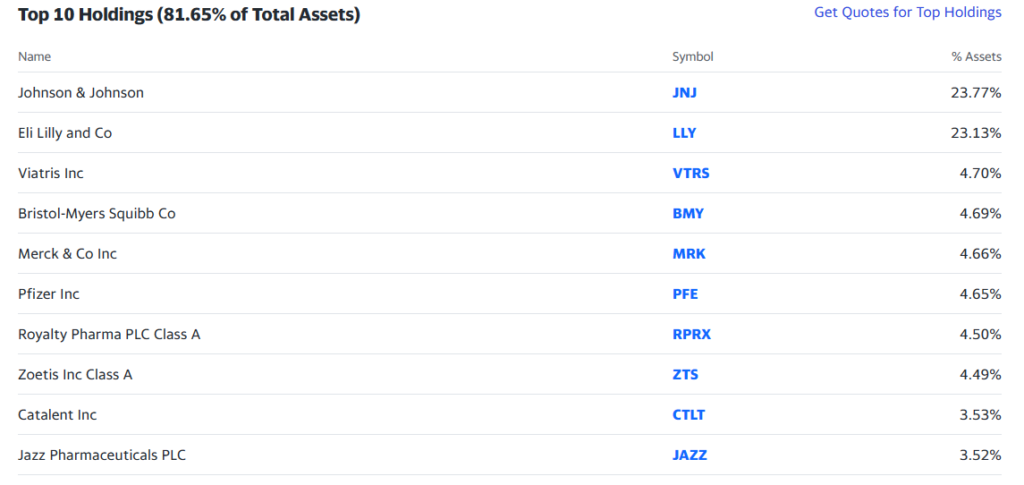
Investors looking to go general would opt for a U.S Pharma ETF such as the iShares U.S Pharma ETF
https://www.ishares.com/us/products/239519/ishares-us-pharmaceuticals-etf
Figure: iShares U.S Pharma ETF top holdings
Finally, I would look for anyone seeking income (especially if have gained in sectors/markets such as U.S large-cap tech or broad E.U markets YTD gains) to look at options or notes for income from the gains of these respected holdings as I have written before and from the above on the present economic situation the markets could be quite choppy.
However, those who have benefited from the magnificent 7 rally over the last 9 months may want to sell some of the gains and either look at put options to generate income or add some structured notes for the same reason on these stocks (while still long) or on the broad market such as the S&P 500 to generate gains in a stagnant to slightly downward market in the short to near term.
Hope this has been useful for clients and please feel free to email me using the button below if you have any questions relating to your portfolio and future asset allocation.
Other articles you might find interesting:
- Structured Notes Explained For Expats
- Lloyds International Bank Review and How Expats Access Their Fixed Deposits
- Best Investment Platforms for Expats – 2023