
As global real estate markets continue to shift in 2025, investors are seeking new and profitable opportunities beyond traditional markets. Southeast Asia has emerged as a prime region for real estate investment, offering strong potential for capital appreciation, high rental yields, and diverse property options.
For expats and international investors looking to diversify their portfolios, five countries stand out as the top destinations in the ASEAN region: Cambodia, Malaysia, Thailand, and Singapore. Each of these nations presents unique advantages, ranging from rapid urbanisation and economic expansion to investor-friendly regulations and strong demand for rental properties.
I have lived in Thailand for close to 10 years, and having recently bought a property to live in, I have been watching for opportunities in Asia for investments. Many UK citizens like property investment, and there are ways you can invest as an expat, because many countries have rules about foreigners owning land and/ or property. There can also be other benefit,s such as residency.
Any questions, please contact me through my website by using the button at the bottom of this page or through my contact page.

Why Invest in ASEAN Real Estate in 2025?
- Strong Economic Growth – Many Southeast Asian economies continue to experience robust GDP growth, driving demand for residential, commercial, and mixed-use developments.
- Urbanisation and Infrastructure Development – Expanding cityscapes, improved transportation networks and growing business hubs make ASEAN cities attractive for long-term investment.
- Favourable Investment Policies – Some countries offer tax incentives, residency programs, and clear legal frameworks that encourage foreign ownership.
- High Rental Yields – Many ASEAN cities offer significantly higher rental yields compared to Western markets, making them lucrative for buy-to-let investors.
- Diversification Benefits – Investing in Southeast Asia allows expats to hedge against economic fluctuations in their home countries while benefiting from emerging market growth.
Asia is a huge place with a lot of diversity in climates and environments. You can go from the islands of Indonesia to cities like Bangkok and Malaysia. It’s fast becoming a place that many are calling home for various reasons, including myself, and the economy is growing at a steady rate, opening itself up to more and more investment. Finally, the amount of change happening in the region creates opportunities and is exciting.
Top ASEAN Property Investment Destinations
- Cambodia: With a booming real estate market and a U.S. dollar-based economy, Cambodia remains an attractive destination, particularly in Phnom Penh and Sihanoukville.
- Malaysia: A well-developed property market, affordable housing prices, and government incentives such as the MM2H (Malaysia My Second Home) program make Malaysia a top choice.
- The Philippines: High demand for residential and commercial properties in Metro Manila and Cebu, coupled with strong economic growth, makes the country a key investment hub.
- Thailand: Bangkok, Phuket, and Pattaya continue to be hotspots for property investment, thanks to tourism, infrastructure development, and foreign-friendly property laws.
- Singapore: As a global financial hub, Singapore remains a stable and high-value property market with strong appreciation potential, despite its premium pricing.
For expats looking to grow their wealth and secure assets in high-potential markets, ASEAN real estate presents a compelling opportunity in 2025. Understanding local regulations, market trends, and economic dynamics will be key to making informed investment decisions.
Investing in Cambodia: A Frontier Market with Rising Prices and Hidden Opportunities
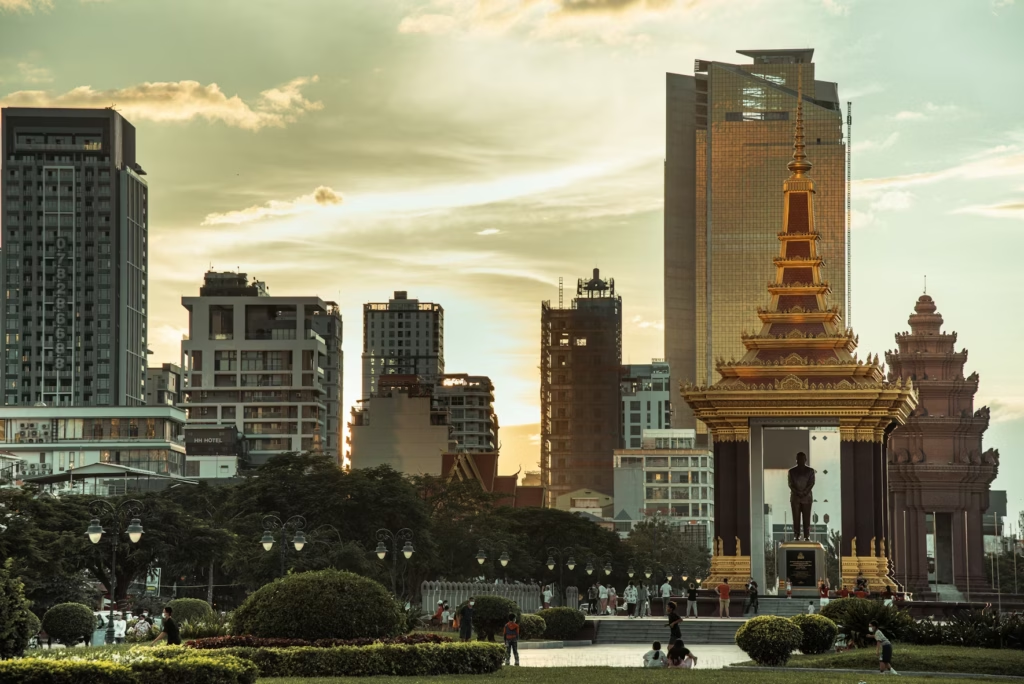
Cambodia has long been seen as a frontier market, but as its economy expands and urbanisation accelerates, real estate prices in key areas have started to climb. While it remains an attractive destination for investors, certain parts of the market, especially in Phnom Penh, are becoming noticeably more expensive. That said, there are still areas where good value can be found, making Cambodia an interesting but increasingly selective investment opportunity.
I have spent some time in Cambodia, specifically Phnom Penh, where I got to look around and see what was happening in the city, what the economy looked like and how people felt. I also took a trip to Angkor Wat and a few other places while I was there. Incredible to see the size and scale and learn about the history of Angkor Wat.
Why Consider Investing in Cambodia?
The country has experienced significant economic growth in recent years, driving demand for residential and commercial properties. Phnom Penh, in particular, has seen a surge in real estate development, with luxury condos, office spaces, and retail hubs transforming the city’s skyline. Urbanisation is picking up pace, and as more people move to the capital, the need for quality housing continues to grow.
One of the main attractions of Cambodia’s property market has been its relatively low entry cost compared to other Southeast Asian countries. However, prices in prime locations are no longer as low as they once were. Some areas feel overpriced, particularly in central Phnom Penh, where high-end developments have driven up costs. Despite this, there are still good deals to be found, especially in emerging districts and secondary cities.
Where Are the Best Places to Buy?
- Phnom Penh remains the top choice for investors, though location is everything. The most prestigious areas have become expensive, making it harder to find good value. However, certain up-and-coming neighbourhoods still offer reasonable prices and strong potential for appreciation.
- Siem Reap has a steady tourism-driven property market, making it an appealing choice for those interested in hospitality investments like boutique hotels or Airbnb-style rentals.
- Sihanoukville has seen rapid and sometimes volatile growth due to foreign investment. While the market there has cooled in recent years, beachfront properties and resort developments still hold long-term potential.
How Easy Is It for Foreigners to Buy?
One of Cambodia’s advantages is its relatively open legal framework for foreign property ownership. Foreigners can own condominiums in certain buildings, making it easier to invest compared to other countries in the region. However, land ownership remains restricted, meaning more complex structures like local partnerships or long-term leases are needed for those looking to invest in landed property.
Is It Still a Good Investment?
While Cambodia continues to offer opportunities, it’s no longer the ultra-cheap market it once was. Investors need to be more selective, focusing on areas with growth potential rather than simply expecting rapid appreciation everywhere. The country is still one of the last true frontier markets in Southeast Asia, but rising prices mean careful research and local knowledge are more important than ever.
Investing in Malaysia: My Favourite ASEAN Property Market for 2025

When it comes to real estate investment in Southeast Asia, Malaysia stands out as my personal favourite. The country offers a unique mix of affordability, modern infrastructure, and long-term investment potential, making it one of the most attractive property markets in the region. While some markets in Asia have become increasingly expensive or restrictive for foreign buyers, Malaysia remains accessible, well-developed, and full of opportunity.
Why Invest in Malaysia?
Malaysia has long been popular among international investors and expats, thanks to its high quality of life, favourable exchange rates, and open property laws. The country boasts a well-developed infrastructure, a business-friendly environment, and a diverse real estate market that caters to both luxury and budget-conscious investors.
One of the biggest advantages right now is the weak Malaysian ringgit, which has been underperforming for several years. This makes it an excellent time for foreign investors to enter the market, as they can purchase property at a significant discount. If the ringgit strengthens, as many analysts predict, investors stand to benefit not just from property appreciation but also from currency gains.
Where Are the Best Places to Invest?
1. Kuala Lumpur – The Heart of Malaysia’s Real Estate Market
The capital city remains the top choice for investors, offering some of the most affordable real estate in the region compared to cities like Singapore or Bangkok.
- The city’s modern skyline is filled with high-end condominiums, yet prices remain surprisingly reasonable given the level of development.
- Expats and professionals fuel strong rental demand, particularly in key areas like KLCC, Bangsar, and Mont Kiara.
- With ongoing infrastructure improvements, including MRT and LRT expansions, connectivity and convenience continue to improve.
2. Penang – A Lifestyle and Retirement Haven
Penang, particularly George Town, has become a popular choice for retirees and expats looking for a mix of culture, affordability, and coastal living.
- The island offers a more relaxed lifestyle compared to KL, with strong demand for both short-term rentals and long-term stays.
- Property prices are generally lower than in the capital, but demand remains strong, especially in beachfront and heritage properties.
3. Johor Bahru – A Cross-Border Investment Play
Johor Bahru, located just across the border from Singapore, continues to attract investors looking to capitalise on its proximity to one of Asia’s most expensive real estate markets.
- While the city has faced some issues with oversupply, new developments linked to the Malaysia-Singapore Rapid Transit System (RTS) could boost property demand in the coming years.
- It remains a viable option for investors willing to take a longer-term view.
Is Malaysia Still a Good Investment?
While Malaysia’s real estate market has faced some challenges, particularly with oversupply in certain segments, I believe it remains one of the best property markets in Southeast Asia for foreign investors. Unlike many other ASEAN countries, Malaysia allows foreigners to own freehold property, making it a much easier market to enter.
Yes, vacancy rates in Kuala Lumpur have risen, and some areas have an oversupply of condos. However, this has also created opportunities—investors who focus on prime locations, high-quality developments, and expat-friendly properties can still see strong rental yields and long-term appreciation.
For those looking for a balance of affordability, stability, and investment upside, Malaysia remains a top choice. With the potential for currency appreciation, infrastructure expansion, and continued foreign interest, I see it as one of the best real estate opportunities in the region.
Investing in Singapore: Navigating Taxes, Prices, and Potential in 2025
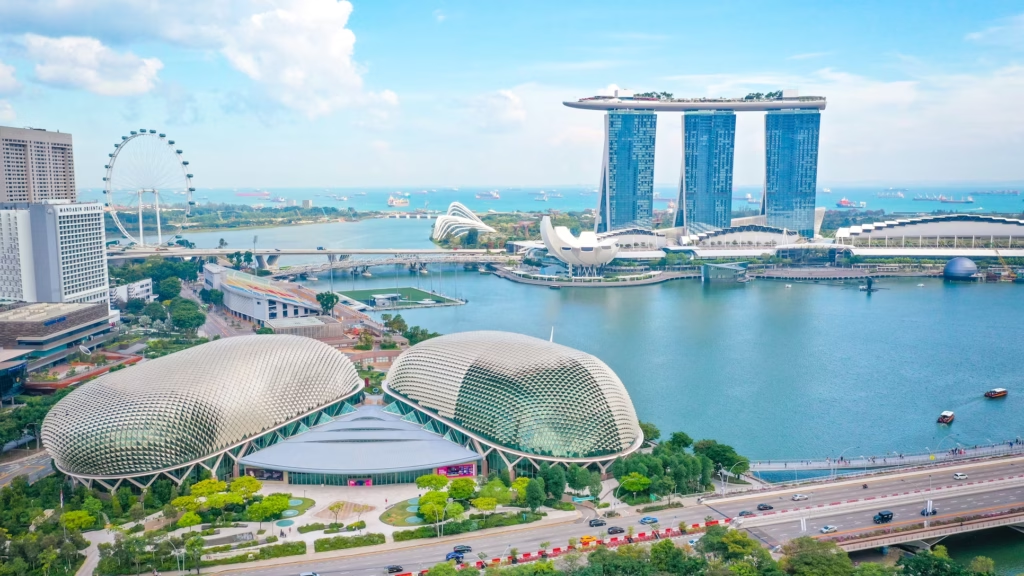
Singapore has long been a prime destination for property investors, renowned for its political stability, robust economy, and strategic location in Asia. However, as of 2025, the landscape has evolved, presenting both challenges and opportunities for expat investors.
Taxation Landscape for Expats in 2025
In 2025, Singapore will continue to implement measures to maintain a stable property market. Notably, the Additional Buyer’s Stamp Duty (ABSD) remains a significant consideration for expats:
- Foreign Buyers: Foreigners are subject to an ABSD of 60% on any residential property purchase.
- Permanent Residents: Permanent Residents (PRs) face an ABSD of 5% for their first residential property and 30% for subsequent properties.
These rates are designed to moderate demand and ensure housing affordability for residents.
Additionally, the government has introduced a one-off Property Tax (PT) rebate of up to 20%, capped at S$1,000, for all owner-occupied residential properties in 2025. This rebate will be automatically offset against any PT payable.
Property Prices: A Comparative Analysis
As of 2025, Singapore’s property market is experiencing modest growth. Analysts project a 3% increase in home prices, reflecting steady demand and limited supply.
When compared to other global cities:
- Hong Kong: After a prolonged downturn, Hong Kong’s property market is rebounding, with anticipated price increases of up to 10% in 2025.
- Monaco: Known for its ultra-luxury market, Monaco continues to command some of the highest property prices globally, with limited availability driving sustained price appreciation.
In terms of price per square meter, Singapore remains more affordable than Monaco and is becoming increasingly competitive with Hong Kong.
Investment Potential in Singapore
Despite higher taxation for foreign buyers, Singapore offers compelling reasons for investment:
- Economic Resilience: Singapore’s diversified economy and prudent fiscal policies contribute to its resilience against global economic fluctuations.
- Political Stability: A transparent legal system and low corruption levels make it a secure environment for property ownership.
- Quality of Life: Excellent healthcare, education, and infrastructure enhance its appeal to expats and tenants.
While the initial costs, including taxes, are substantial, the long-term benefits of investing in Singapore’s property market—such as capital appreciation and rental income, remain attractive.
Investing in Thailand: Bangkok & Chiang Mai Real Estate in 2025
Thailand continues to be a top choice for foreign property investors, with Bangkok and Chiang Mai standing out as prime locations. Each city offers unique advantages, but careful planning and due diligence are necessary to navigate potential risks.
Bangkok: A High-Potential but Competitive Market
Bangkok remains the economic and financial heart of Thailand, attracting both investors and expats. The city’s real estate market is well-developed, with a mix of high-end luxury developments and more affordable investment opportunities.
Best Areas to Consider
- Silom & Sathorn – These are prime business districts with high demand for both residential and commercial properties. Popular with professionals and executives, the area offers strong rental yields, but prices are on the higher side.
- Sukhumvit (Asok, Thonglor, Ekkamai) – This is a hotspot for expats, with top-tier amenities, international schools, and easy access to public transport. Property values here tend to appreciate steadily, but oversupply in the condo market is something to watch out for.
- Rama IX & Ratchada – Often considered Bangkok’s “new CBD,” these areas are experiencing rapid growth with new developments and corporate offices emerging. They offer good value compared to more established districts.
Top Developers to Watch
- Supalai – Known for offering well-built condominiums and houses at reasonable prices, making it a good choice for investors looking for reliability and affordability.
- Sansiri – A premium developer with high-end and mid-range condos that tend to attract expats and wealthy locals.
- Ananda Development – Specialises in condos close to mass transit lines, which makes their properties desirable for rental markets.
Things to Be Cautious About
- Foreign Ownership Rules – Foreigners can only own condominiums (with a limit of 49% per building). Land ownership remains restricted, requiring creative legal structures that come with risks.
- Oversupply in the Condo Market – Some areas, particularly in Sukhumvit, have a surplus of new developments, which can put pressure on rental yields.
- Legal Considerations – Property laws in Thailand can be complex. Always work with a reputable lawyer before making a purchase.
Chiang Mai: A More Relaxed & Affordable Option
Chiang Mai is becoming increasingly popular among investors looking for a slower pace of life and lower property prices. The city attracts retirees, digital nomads, and long-term expats who prefer its cooler climate and lower cost of living.
Best Areas to Consider
- Nimmanhaemin (Nimman) – This is Chiang Mai’s trendiest area, packed with cafes, coworking spaces, and boutique condos. It’s popular among younger expats and digital nomads.
- Old City & Riverside – For investors interested in the short-term rental market, these areas see high tourist footfall and offer opportunities for boutique hotels or Airbnb-style accommodations.
- Hang Dong & Mae Rim – These suburban areas offer more space, ideal for those looking to invest in villas or larger properties.
Things to Be Cautious About
- Short-Term Rental Restrictions – Thai laws around Airbnb and short-term rentals are strict. Investors targeting this market need to ensure they comply with local regulations.
- Limited Resale Market – Unlike Bangkok, Chiang Mai doesn’t have as many large-scale investors, making it harder to resell properties quickly.
- Foreign Buyer Limitations – Just like in Bangkok, foreign buyers are limited to condo ownership unless they invest through a Thai company.
Further Resources to Help Expats
- Expats Property Guide To Asia
- Taiwan – A great place to invest in real estate?
- Japanese Property Market
- Structured Notes in Your Portfolio – Alternative Investments
While physical property in markets like Vietnam or Thailand offers the allure of “bricks and mortar,” it comes with significant liquidity risks and legal hurdles for foreigners. In 2026, many expats are choosing Global Real Estate Investment Trusts (REITs) instead. These allow you to gain exposure to high-yield commercial ASEAN real estate, like data centres in Singapore or logistics hubs in Malaysia, without the 49% ownership restrictions, maintenance headaches, or the difficulty of repatriating funds when you want to sell.
In 2026, prime areas in “First Cities” like Bangkok and Ho Chi Minh City have seen prices peak and rental yields compress. The “Second City” strategy involves looking at high-growth regional hubs like Penang (Malaysia) or Da Nang (Vietnam). These cities often offer higher rental yields (targeting 6–8%) and lower entry points, driven by the rise of remote work and the “China Plus One” manufacturing shift, which is bringing a new wave of high-earning expat tenants to these secondary locations.
Tax transparency has increased significantly across ASEAN. For example, Thailand now taxes foreign-sourced income brought into the country, which can impact how you fund your property purchase or receive rental income. Similarly, Malaysia’s updated residency programs (like the newer MM2H tiers) have specific property purchase requirements. Before investing, it is vital to ensure your property portfolio is structured so that you aren’t inadvertently creating a 20–35% income tax liability on the funds you move across borders to maintain your investment.