
This article want to go over the different assets and what is actually causing inflation. With some ideas for your portfolio and what are your options for the more conservative equity investor?
Having recently written an article about what stocks and funds to look at investing in during an inflationary environment that we presently find most of the world in. I concluded that you may want to look at two options from an equity perspective. One of those is in companies with good free cash flow, a high moat and a defensive business. An example like this might be an income fund or low beta for the conservative equity investor.
On the other end of the spectrum would be selective EM or frontier markets where they have rapid growth and are not subject to high debt in USD and an example of this may be Vietnam, Uzbekistan for frontier and China on the EM for higher risk portfolios. EM markets have a history of skipping recession if you look at China in 2008 and they are uncorrelated to the U.S. However, I understand this isn’t for everyone.
What is Happening? Why Inflation?
Since 2008 many financial analysts have argued the fact that we would be in an inflationary environment due to the money created to sustain the economy was unsustainable. Due to QE (Quantitative easing), whereby money is used to purchase debt, thus artificially boosting up the economy with low-interest rates.
This is mixed with the implementation of cheap labour from places such as China and a favourable demographic of the working age population but this is now changing. Central banks had made the most of these “good times” periods with low-interest rates and printing money keeping interest rates low.
However many now think that this period of low rates is over we could be in a long-term inflationary environment due to the hangover of these consequences. QE has become the norm since 2008 and argued that this has disrupted the flow of markets. This is why it could be a challenging period for your portfolio if holding equities (or this year’s bonds as well).

From an equity market perspective with low inflation rates, what we saw was funding to almost anything with no need to look at those vital aspects of companies such as profitability thus these stock prices become hugely inflated with investors’ money pumping the share prices high this was evident by the P.E ratios in some of the stocks such as, Tesla.
Now, the sentiment has changed. The era of high stock valuations has gone and a low-interest rate environment has been transformed into a high-interest rate to aim to tackle inflation.
So, the question remains of where to invest.
The graph below shows assets’ performance over the last 300 years in inflation environments
Some, for the stable investor, might want to look at TIPs that have inflation protection (even if not real rate inflation).
Economic Life During Inflationary Environments
Inflation has been associated with economic collapse. As investors lose confidence in assets and currencies that have been hit hard start to sell holdings in these assets. Including companies with perfectly good profits and assets. But, even if people are selling assets for uncertainty history will tell you that holding on will gain higher in large cap U.S equities (see below).

To quote Buffet, “buy when others are fearful”. I would say for those that are sitting in funds and stocks that are presently down (and this includes myself this year with a portfolio that is down).
Is just to sit tight if you have faith in your stocks and funds (these would be ones with good earnings and quality companies) and didn’t get in to sell before you need to and stick to your long-term plan. Meanwhile, now more than last year see it as a lot better time to be getting in the market for the long term.
Most people that get into equities will not do so with a short-term time frame and would need at least a 5-year time period to invest. It would make no sense now to sell at a low price and crystallise your losses. Again to quote Buffet “you wouldn’t sell your farm thinking if it’s going to rain next year”
Remember, it was only a few years ago when U.S oil couldn’t sell barrels of oil. in the midst of the pandemic. It just shows how quickly sentiment can change.
Prepare to Invest During Inflation
Despite what is being said by the media, inflation is not transitory and is here to stay.
How it will unfold is unclear. However, make sure the companies that you have invested in have good earnings and high-profit margins. I would look to stay away (at least for the short/ medium term) from tech stocks that thrive in low-interest-rate environments.
Some stock/fund ideas are:
Funds:
Fundsmith
Terry has a simple philosophy of picking stocks with his philosophy being on picking stocks-
- High cash flow
- High Moat
- Completive advantage
- High degree of certainty
These seem perfect in an inflationary environment and as of writing November 2022, some of the good quality, tech stocks such as Meta and Microsoft have fallen 7-10% this week respectively. This has hit the fund hard. Terry has also sent a newsletter that is buying now (much like with Buffet) to make the most of these low valuations so see it as a good time to invest for the long-term investors.
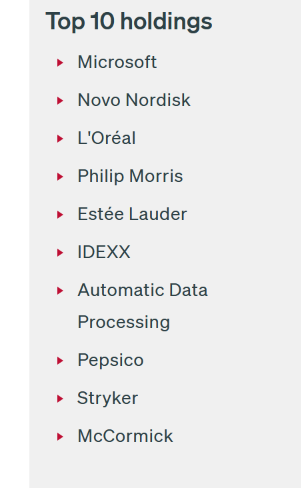
Fund smith top 10 holding Nov 2022
From individual Stocks,
I have looked at Costco.
Wholesale consumer staples provide favourable pricing for budget-conscious households.
Consumer staples like groceries, clothing and household goods will see very little change in their demand because they are vital to the lives of consumers. The top line of consumer staple retailers will be largely unaffected by economic recessions. Costco’s (NASDAQ:COST) operations should be fairly resistant to the pressures of an economic recession, providing consumers with the necessities they need at wholesale pricing. This should be favourable to Costco as consumers become more price-conscious as household budgets tighten.
It also has good health in the company which is a plus with inflation.
Conclusion
If you are currently experiencing some times of ‘red’ where your portfolio is down due to stocks or funds being hit hard then there may be a potential to buy.
There are other options that could be investigated to offer some kind of diversification to a portfolio, however, in my eyes diversification is far more about finding returns which are less likely to be correlated.
My current prediction is that inflation is here to stay for longer than most expect or think due to the amount of money we have printed and this will have an impact on inflation and interest rates. This is good for those who prefer to put cash in safer places, however, it is unlikely to keep up with the current rate of inflation.
Due to all the rises in costs, it also means businesses are having to change their prices weekly why you should go for the companies that have a solid amount of free cash flow so they can look at making deals on items such as energy and price freezes for products?
As always, if you have any questions, please email me info@investmentsforexpats.com
Related articles: