Getting residency in Monaco is a dream for many wealthy expats. It is difficult, but it is doable. In this guide, we explain the routes, the documents you need and the costs to expect.
Residency vs citizenship
Permanent residency – permanent residency lets a person who isn’t a citizen live in a country permanently.
In most cases, permanent residents also get certain privileges, such as the right to work.
However, permanent residents usually cannot:
- Right to vote
- Standing in elections
- Senior employment
- Applying for national security
- Country’s passport
Permanent residents may later become citizens through a process called naturalisation. Each country sets its own procedure.
Citizenship – citizenship makes a person a full member of a country. In return for its benefits, citizens usually pay taxes to the state.
For example, citizens get basic rights, a passport and the right to live and work in the country. They can also apply for any job or stand in elections.
Some countries allow dual citizenship, so a person can be a citizen of two countries. A few even allow multiple citizenships. By contrast, a person with no citizenship is stateless.
Why choose residency in Monaco?
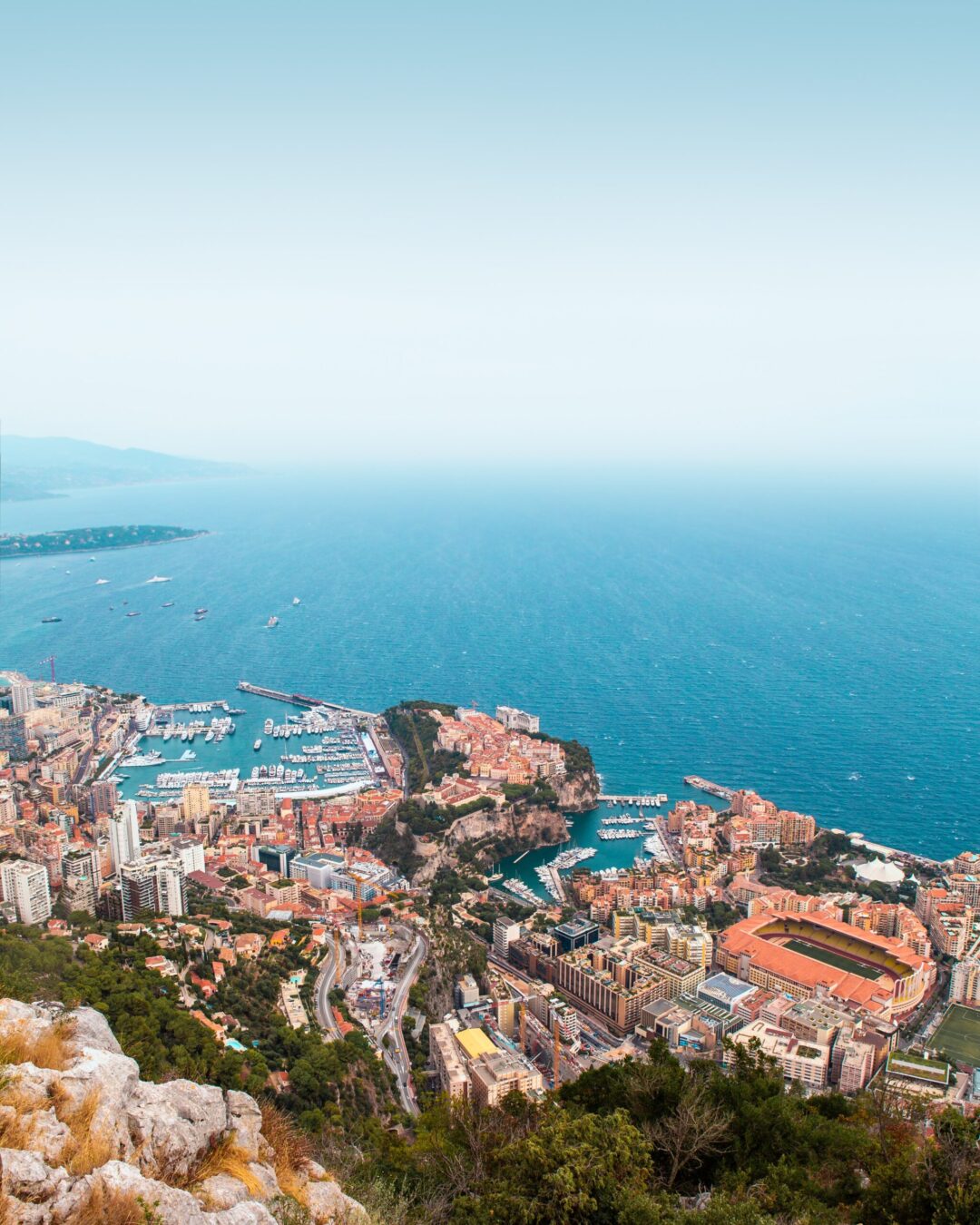
Monaco is one of the most expensive and wealthiest places in the world.
The official language spoken in Monaco is French, however, most people also speak English and Italian.
Its climate, scenery, food, beaches and casinos make it a playground for the wealthy.
Monaco has no personal income tax for most residents, although French nationals are an exception. Also, US citizens remain taxable in the US wherever they live. The currency is the euro (€).
Monaco is home to people of many faiths and nationalities. It is also famous for sport, especially the Monaco Grand Prix.
Now let us look at how to get residency in Monaco, and then citizenship.
Residency in Monaco: the main routes
There are three main ways to get residency in Monaco:
- Employment. If you have a job with a Monegasque employer, you can use your employment contract to apply.
- Business. If you plan to start a business in Monaco, you can also qualify. However, you first need official authorisation to set up the business.
- Financial independence. Finally, the most common route is to show you can support yourself. In practice, most Monaco banks expect a deposit of around €500,000 before they issue the reference letter you need.
The three residence cards
How the residence card works. The residence card in Monaco is the Carte de Séjour. There are three main stages, each with its own timeline.
First, you receive a Temporary Residence Card (Carte de Séjour Temporaire).
This card lasts 12 months.
Authorities expect you to live in Monaco genuinely during this time. Historically, the guideline was at least three months a year, but check the current expectation.
You then renew the card each year.
In total, you hold the temporary card for three years before moving to the next stage.
After three years, you can apply for the Ordinary Residence Card (Carte de Séjour Ordinaire).
The ordinary card lasts three years, and you can renew it.
The final stage is for people who want to settle in Monaco for the long term.
At this stage, you can get a Privileged Residence Card, which lasts 10 years. As a result, you no longer need to renew every three years.
However, you normally need ten years of continuous residence before you can apply for it.
Holders are expected to make Monaco their main home. If you are leaving the UK, you should also check how the UK statutory residence test applies to you.
Therefore, the privileged card suits people who want to make Monaco their permanent home.
Applying for residency in Monaco
Applying for residency in Monaco is complex and takes a lot of paperwork.
However, renewals are easier. The full process usually takes around two to five months, and sometimes longer.
The process is easier for citizens of the EEA. Other nationals can visit Monaco on a Schengen visa.
However, non-EEA nationals who want to live there must first apply for a long-stay visa at a French consulate.
If you are a non-EEA national who has lived in France for more than a year, you may be able to transfer your residency to Monaco instead.
After that, you follow the same process as EEA citizens.
The Monaco government asks every applicant for three things: proof of accommodation in Monaco, proof of financial self-sufficiency and proof of good character.
Documents you need
Required documents. You also need general documents. These include an application form, a valid passport, a birth certificate, a marriage certificate and, in some cases, a health report.
You get the residency form from the Sûreté Publique, Monaco’s police authority.
If you are divorced, you should also provide your divorce certificate.
In addition, the authorities ask about your education and career. You also need health insurance that covers you in Monaco.
Proof of accommodation
You can use any one of the following as proof of accommodation:
- Buying property – you can buy a property in Monaco, with no minimum value.
However, Monaco has some of the most expensive property in Europe, largely because it is so small.
When you apply, you submit proof of ownership, such as the deed or purchase contract.
Buying is not compulsory. Remember that property prices can fall as well as rise, so treat it as a home first rather than a guaranteed investment.
- Renting – you can rent or lease a property for at least one year. The home must be large enough for your whole family.
For example, a family of four needs at least two bedrooms. A one-bedroom flat may suit a couple.
You submit a copy of your rental contract with your application. - Company-owned property – you can live in a home owned by a company of which you are a director or shareholder.
In this case, you submit a letter signed by the owner, plus the deed, purchase contract or rental contract. - Living with a close relative – you can live with a spouse, partner or close relative who already lives in Monaco.
Again, you submit the deed, purchase contract or rental contract, plus a letter signed by the owner.
For any of these options, you also need the electricity contract for the property. Buying in Monaco, in particular, needs substantial wealth.
For example, €1 million may buy only around 20 square metres. Meanwhile, rents for a small flat often start from several thousand euros a month.
If you rent, note that a 1% registration duty applies to leases. Landlords may pass this cost on to tenants.
On the plus side, Monaco has no annual property tax for individuals.
Proof of financial self-sufficiency
Along with proof of accommodation, you also need proof that you can support yourself. There are four main ways to show this:
- Bank deposit – most applicants open an account with a Monaco bank. There is no legal minimum, but most banks expect around €500,000 before they issue a reference letter.
Some banks ask for more and a few may accept less.
The bank then gives you an official letter to include with your application. - Employment contract – you can show paid employment in Monaco.
In this case, you submit your employment contract and the government’s authorisation for your employer to hire you. - Starting a company – you can set up a business in Monaco. First, however, you need authorisation from the government.
You then submit a copy of that authorisation letter. - Support from a close relative – you can show financial support from a spouse, partner or close relative who lives in Monaco.
This stage usually takes two to five months. However, it can take longer if you are starting a new company.
Compared with many other residency programmes, Monaco’s rules are clear. Even so, the overall cost is high.
Proof of Good Character
You also need criminal record certificates from the countries where you have lived in the past five years.
Monaco takes good character seriously, and a clean record is essential.
Step-by-step process for residency in Monaco
Here is the step-by-step process for residency in Monaco:
- Gather your documents – collect the general documents and all the proofs above. Then complete the application forms. This usually takes two to three weeks.
- Interview – after you apply, the police invite you to an interview in Monaco.
They ask about your education, career and family.
You also hand over your documents at this stage. - Approval – after the interview, the authorities review your file. If they approve it, you receive your residence card.
EU citizens often wait around two months. For non-EU citizens, it can take longer.
How to get citizenship after residency in Monaco
First of all, Monaco does not allow dual citizenship. So if you apply, you must give up your other nationality.
In addition, you normally need at least ten years of residence in Monaco as an adult.
In practice, very few people become Monegasque citizens this way, and the Prince decides every application.
Children of newly naturalised citizens may also become citizens.
Marriage to a Monegasque national can also lead to citizenship, but only after a long qualifying period. Again, the Prince has the final say.
Before you apply, weigh up the pros and cons carefully. You may also want to compare Monaco with the easiest countries to get permanent residency.
Disadvantages of Residing in Monaco
- The cost of living in Monaco is very high. Some everyday prices are similar to other Western countries, but many are much higher.
- Rent is the biggest cost. Even a small flat can cost several thousand euros a month, which is more than the nearby French Riviera.
- Eating out and groceries are also expensive compared with most Western countries.
Advantages of Residing in Monaco
- Residency in Monaco can extend to your family. This may include your spouse or partner, children and, in some cases, parents.
- A Monaco passport gives visa-free travel to many countries. However, few people ever become citizens.
- The tax system is also attractive. Most residents pay no personal income tax, wealth tax or capital gains tax. However, French nationals and US citizens remain taxable at home, so take specialist tax advice.
- Unlike some investment migration programmes, Monaco does not ask for a non-refundable donation.
- Monaco also offers good schools, healthcare and a very low crime rate.
Next steps
Moving to Monaco affects your tax, pensions and investments. If you would like to talk it through, book a discovery call with us. You can also read our guide to UK expat pensions.
Free tools for this topic
All free tools →Free, no sign-up, nothing stored.

Henry Temple-Baxter
Henry Temple-Baxter is the founder of Investments for Expats and is CISI Level 4 qualified. A long-term expat himself, he has lived and worked in Kuala Lumpur, Beijing, Bangkok, Hong Kong and Ho Chi Minh City. He set up the firm in 2018 to give UK expats fee-only, transparent advice on pensions, tax and investing abroad.
This guide is general information, not personal advice. Tax rules can change and their effect depends on your circumstances. Capital at risk.