
Revisiting Asset Allocation in the Light of Modern Research
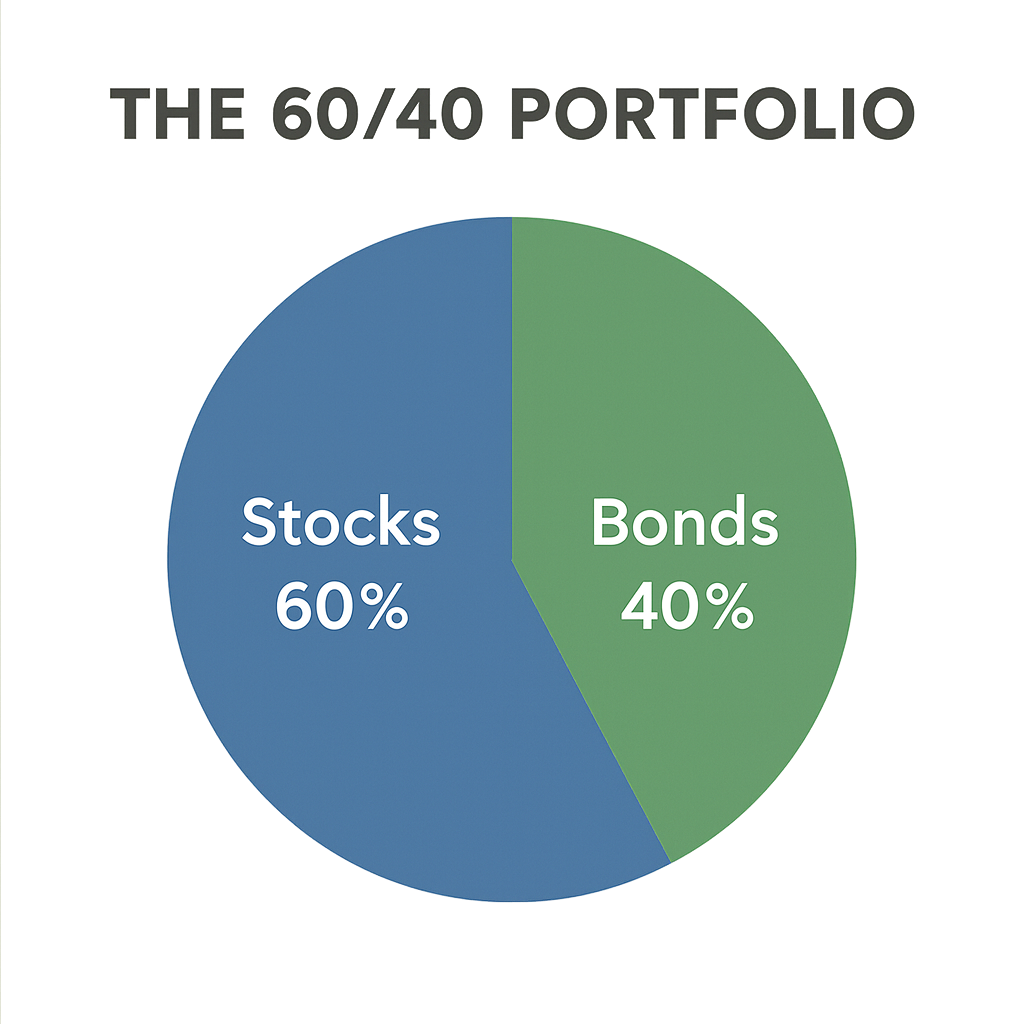
For decades, the 60/40 portfolio — the allocation of 60% equities and 40% bonds — has stood as a foundational principle of investment strategy. Rooted in modern portfolio theory and institutionalised in financial planning, the model promised a balance between growth and stability. Yet in today’s shifting macroeconomic environment, and in light of recent peer-reviewed research, its continued relevance is under scrutiny. Investors are increasingly asking: Should we still diversify across stocks and bonds — or has the time come to consider a more aggressive, equity-heavy allocation?
This question has resurfaced with particular urgency following the publication of “The Best Strategies for Long-Term Investors” by Lubos Pastor and M. Blair Vorsatz (SSRN, 2023). Their work, grounded in utility-based analysis rather than conventional return metrics, argues that for long-term investors with moderate risk tolerance, a 100% equity allocation often outperforms more diversified approaches. Their conclusion is not based merely on historical returns but on rigorous utility modelling, accounting for an investor’s preferences, compounding over time, and sensitivity to risk.
Pastor and Vorsatz evaluated 27 investment strategies, from traditional 60/40 allocations to more sophisticated approaches including risk parity, factor tilts (e.g., value, momentum), trend-following, and even private equity proxies. Using data from 1926 to 2022, they simulated how each strategy would perform for long-term investors who care not just about expected returns, but about how those returns translate into long-term utility. Their findings were unambiguous: portfolios fully allocated to equities, particularly global, low-cost index funds, delivered the highest utility over long horizons.
This research echoes earlier conclusions from the likes of Jeremy Siegel, whose influential work “Stocks for the Long Run” (Siegel, 1994; 6th ed. 2022) emphasised equities’ historical supremacy over bonds in terms of inflation-adjusted returns. Similarly, Fama and French’s work on equity premiums supports the notion that the long-run real returns of equities dwarf those of fixed income, even when accounting for volatility.
Some like the 60/40 allocation
However, not all academics and practitioners are ready to abandon the 60/40 construct. Several recent studies have mounted a defence of bond allocations, even in today’s low-yield and inflation-sensitive environment. Notably, research by Ilmanen et al. (AQR Capital, 2022) emphasises the continued role of bonds in dampening portfolio volatility and providing liquidity. Their findings suggest that while equities may outperform over long periods, the drawdowns can be emotionally and financially catastrophic for investors without the psychological resilience to endure them.
Indeed, one of the strongest arguments in favour of the 60/40 model is behavioural rather than financial. Studies in behavioural finance — such as those by Barberis and Thaler (2003) and Benartzi and Thaler’s Myopic Loss Aversion and the Equity Premium Puzzle (1995) — have shown that investors often overreact to short-term losses, leading to suboptimal decisions. Bonds can function as a psychological anchor, providing perceived stability in times of market stress and helping prevent panic selling.
Furthermore, recent empirical studies examining post-2000 data have questioned the assumption that equity outperformance is as reliable as historical averages suggest. Antti Ilmanen, in his comprehensive book Expected Returns (2011), cautions against assuming that past equity premiums will persist unchanged. He highlights periods, such as the decade following the dot-com crash, when diversified portfolios outperformed pure equity allocations due to equity stagnation.
Additionally, the 60/40 portfolio has not always underperformed. During the financial crisis of 2008 and again during the initial COVID-19 shock in early 2020, bonds served their purpose well, providing a buffer when equity markets plunged. Critics of the “all-in equity” approach point to these episodes as reminders that historical averages do not protect against sequence-of-return risk — the danger that poor returns in the early years of retirement, or just before it, can irreparably damage an investor’s financial future.
However, Pastor and Vorsatz challenge even this assumption. They argue that the primary risk for long-term investors is not volatility but inflation-adjusted wealth over time. Their analysis suggests that, while bond-heavy portfolios may smooth short-term volatility, they result in significantly lower terminal wealth — and therefore lower utility — over multi-decade horizons. Moreover, their findings indicate that even sophisticated multi-factor or alternative strategies rarely beat the simple, passive approach of 100% equity exposure.
Yet, their model assumes rational behaviour and does not factor in the likelihood that many investors will fail to stay the course. This is where real-world experience diverges from theoretical models. Even well-informed investors frequently underperform their own investments, as documented by Dalbar’s annual Quantitative Analysis of Investor Behaviour reports, which consistently show that actual investor returns lag fund returns due to poor timing and emotional decision-making.
The debate also hinges on the time horizon. For investors in their 20s or 30s with a 30- to 40-year investment window, the arguments for equity dominance are compelling. But for those in retirement, or within five to ten years of it, the rationale for diversification into bonds or other lower-volatility assets remains strong. Research from Blanchett, Finke, and Pfau (2013) on retirement income sustainability supports the use of bond ladders, annuities, and diversified allocations to reduce withdrawal risk and extend portfolio longevity.
The correlation structure between bonds and equities has also changed. Historically, the negative correlation between the two asset classes made the 60/40 portfolio particularly effective. But as seen in 2022, that relationship can break down, especially in inflationary environments. When inflation drives interest rates upward, both equities and bonds can suffer simultaneously, challenging the foundational premise of diversification.
Summary
In light of these arguments, what should the modern investor conclude?
The latest body of research, including the comprehensive work by Pastor and Vorsatz, clearly supports the view that equities should dominate the portfolios of long-term investors who can tolerate volatility and who are focused on maximising long-term real wealth. For younger investors and those with stable incomes or large risk capacities, the evidence increasingly tilts toward equity-heavy or even 100% equity strategies, particularly using global low-cost index funds.
However, this is not a one-size-fits-all conclusion. The enduring value of bonds — especially for liquidity, income planning, and psychological stability — remains backed by both theory and empirical data. For those nearing retirement, drawing down their assets, or with low risk tolerance, a diversified allocation still serves a critical function.
The 60/40 model may no longer be sacrosanct, but it should not be discarded outright. Instead, investors should move toward dynamic asset allocation: one that evolves with age, personal circumstances, and macroeconomic conditions. Glide paths, life-stage funds, and risk-based models that adapt over time may better serve the investor than fixed ratios.
In sum, while a growing body of academic evidence leans in favour of equity-centric investing for those with long horizons and strong stomachs, the broader literature still validates the role of bonds as a stabilising force. The best portfolio, therefore, is not 60/40, nor 100/0 — but rather the one that aligns with your time horizon, risk capacity, behavioural tendencies, and long-term goals.
If you would like a free portfolio review, please contact me here: Free Portfolio Review
For more information similar to this, please read these blogs, which I believe you will like:
- Best Investment Platforms for Expats in 2025
- 2025: Malaysia My Second Home (MM2H) Visa
- The Path to Permanent Residency in Thailand
- Morningstar SIPP Review 2025
While the 60/40 split has historically balanced growth and stability, recent research suggests that 100% equity portfolios may outperform over long horizons for investors with moderate risk tolerance. However, bonds still play a role in reducing volatility and providing liquidity.
Going all-in on equities increases exposure to market volatility and drawdowns, especially during economic shocks. Bonds can act as a buffer, offering diversification, income, and downside protection, particularly for retirees or risk-averse investors.
Modern strategies include risk parity, factor tilts (value, momentum), trend-following, and global equity indexing. These approaches aim to optimise returns while managing risk more dynamically than the static 60/40 model.