The Malaysia My Second Home visa (MM2H) is an excellent option for expats and retirees who want to live in Malaysia, whether part-time or full-time. As a result, it has become a popular topic recently.
I live in Thailand and hold a similar visa there, the Thai Elite. However, being in Southeast Asia for many years and visiting Malaysia, I have come to know about the MM2H and how it can help expats.
I have also written about the MM2H in previous blogs, which you can find below:
- Understanding the New MM2H Rules in Malaysia (2024)
- Residency in Malaysia: Malaysia My Second Home (MM2H)
Finally, if you have any questions, please contact me using the button at the bottom of this page or through my contact page.
Understanding the Malaysia My Second Home Visa
In fact, Malaysia offers three versions of the Malaysia My Second Home visa:
- West Malaysia MM2H: Covers Kuala Lumpur, Penang, and other areas in Peninsular Malaysia.
- Sarawak MM2H (S-MM2H): Specific to the Sarawak region in Malaysian Borneo.
- Sabah MM2H: Exclusive to the Sabah region in Malaysian Borneo.
In this article, we’ll therefore focus mainly on the national MM2H program for West Malaysia, with a brief overview of the Sarawak MM2H program later.
Why Choose Malaysia for Your Second Residency?
Why you should consider Thailand and Malaysia for residency as an expat | Investments For Expats
First of all, Malaysia is a unique blend of cultures, being both distinctly Asian and influenced by its British colonial past. It also boasts a significant Indian and Chinese population, making it an incredibly diverse and vibrant place to live.
Like much of Southeast Asia, for example, Malaysia offers a wealth of experiences. From the bustling metropolis of Kuala Lumpur to traditional villages, from pristine beaches to remote rainforests, there’s something for everyone. In addition, most people speak English, so it is easy to integrate and do business.
People often compare Kuala Lumpur to Singapore, but it costs a fraction of the price. Moreover, it’s modern, efficient, and an excellent base for business activities. As a result, the cost of living in KL is well below Singapore’s, and other regions are cheaper still.
Because it sits at the heart of Southeast Asia, Malaysia is a major hub for budget airline carrier AirAsia, allowing you to reach key Asian cities in one to two hours at low cost.
In short, Malaysia offers a luxury lifestyle at an affordable price, making it a top choice for expats and entrepreneurs.
MM2H Visa Updates – What’s Changed in 2024?

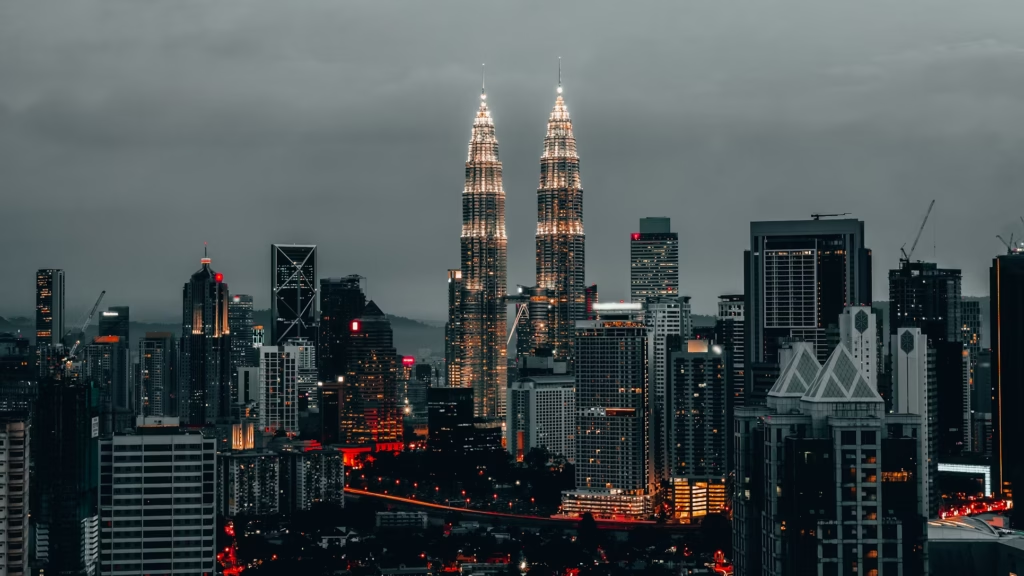
Here is my picture from the last time I was in Kuala Lumpur to see a friend!
Since June 2024, the revamped Malaysia My Second Home visa programme has three tiers – Silver, Gold, and Platinum, plus a new category for Special Economic Zones. Key changes include:
- No more income requirement: Previously, applicants needed to show a monthly offshore income of RM 40,000.
- No liquid asset requirement: Similarly, the government has removed the previous RM 1,500,000 liquid asset requirement.
- Updated fixed deposit amounts: These vary based on the visa tier you apply for (details below).
- Lower minimum age: The government has now lowered this to 25 years.
- Expanded dependent eligibility: You can now bring:
- Spouse
- Unmarried children up to age 34
- Parents over 60
- Parents-in-law
- Minimum stay requirement: this remains 90 days per year (a cut to 60 days was proposed but not adopted).
- Property purchase requirement: Applicants must buy property in Malaysia and hold it for at least 10 years. However, you may sell it earlier if upgrading to a more expensive property.
- Platinum tier changes: Initially, the Platinum MM2H visa was going to include a path to permanent residency, but the government dropped this. Instead, Platinum holders now receive full work and investment rights, similar to the PVIP visa.
MM2H Visa Features
Once you hold a Malaysia My Second Home visa, you receive a multiple-entry social visit pass, allowing you to live in Malaysia for the visa’s duration (not permanent residency, but long-term residency rights).
Other key benefits also include:
- Fixed deposit withdrawal: After approval, you can withdraw 50% of your deposit for a property purchase, education, medical expenses, or tourism.
- Visa duration: Ranges from 5 to 15 years, depending on your visa tier.
- Passport considerations: Silver MM2H visa duration may depend on your passport validity. So consider renewing your passport before applying to maximise your permit duration.
- Business ownership: You can register and own a company. However, you need a work visa to manage it unless you hold a Platinum MM2H visa.
- Employment rights for over-50s: If you’re 50 or older, you can work part-time (up to 20 hours per week).
- To sum up, here’s a table comparing the MM2H program tiers:
| Category | Silver | Gold | Platinum | Special Economic Zone |
| Minimum Age | 25+ | 25+ | 25+ | 21+ |
| Fixed Deposit | USD 150,000 | USD 500,000 | USD 1,000,000 | – Under 50: USD 65,000 – Over 50: USD 32,000 |
| Participation Fee | RM 1,000 | RM 3,000 | RM 200,000 | RM 1,000 |
| Property Requirement | Min RM 600,000 (varies by state) | Min RM 1,000,000 | Min RM 2,000,000 | Must meet state minimum Purchased from a developer |
| Work Eligibility | Not allowed (work permit required) | Not allowed (work permit required) | Allowed (no restrictions) | Not allowed (work permit required) |
| Maid Allowance | Not allowed | Not allowed | Allowed | Not allowed |
| Visa Duration | 5 years (renewable) | 15 years (renewable) | 20 years (renewable) | 10 years (renewable) |
| Minimum Stay Requirement | 90 days per year | 90 days per year | 90 days per year | 90 days per year |
Sarawak S-MM2H vs. Regular MM2H
Importantly, each region runs the Malaysia My Second Home (MM2H) programme in its own way. Sarawak, located in Malaysian Borneo, offers a more flexible version known as S-MM2H, with relaxed eligibility criteria compared to the standard MM2H program.
For this reason, check the rules before you apply. You must have the correct application for where you want to live.
Key Requirements for S-MM2H
- Minimum age: 30 (from 1 January 2025)
- Fixed Deposit: RM 500,000 with a local bank in Sarawak
- Sponsorship: Must have a local sponsor (can be a Sarawak-based visa agent)
- Minimum Stay Requirement: 30 days per year in Sarawak. You can check the latest terms on the Invest Sarawak website.
Some applicants have used the S-MM2H visa to reside in West Malaysia after fulfilling their 30-day stay in Sarawak. Although officials have tolerated this in the past, it is technically against the rules and may jeopardise visa renewal after the initial 5-year period.
Pathway to Permanent Residency & Citizenship
Malaysia does not offer a direct route to permanent residency or citizenship through the MM2H program. So it’s important to know the difference between residency and citizenship. Residency is where you currently live. Citizenship, on the other hand, is the country you are legally bound to. For example, you can be a UK citizen but a resident of Malaysia. In that case, you keep UK documents while you live in Malaysia.
You can change your citizenship. However, it’s not an easy process, and each country has different paths to permanent residency. We explore the options for Malaysia below:
- Naturalization:
- Foreign nationals may apply for Malaysian citizenship after residing in the country for at least 10 years.
- Foreign women married to Malaysian men may apply after just 2 years.
- Dual Citizenship: Not permitted. In other words, to become a Malaysian citizen you must renounce your existing nationality.
Taxation for Foreigners in Malaysia
- Like other resident individuals, MM2H visa holders are currently exempt from tax on foreign income remitted to Malaysia.
- By contrast, income earned in Malaysia is taxable.
If you want to explore this further, please contact me, because there can be some nuances. Thailand has its own rules on foreign income for Thai Elite holders, and I can explain how I have structured my own finances and investments. As always, take specialist tax advice for your situation.
General Malaysian Tax Rules:
- At present, Malaysia does not tax foreign-sourced income for residents.
- However, this exemption has conditions and is due to expire at the end of 2036.
- Meanwhile, the top marginal tax rate for residents in Malaysia is 30% for annual incomes exceeding RM 2 million.
Comparison of Sarawak S-MM2H vs. Regular MM2H
| Category | Sarawak S-MM2H | Regular MM2H (West Malaysia) |
| Income Requirement | Check current S-MM2H terms | None (removed in 2024) |
| Fixed Deposit | RM 500,000 | Varies by tier (USD 150,000 – USD 1,000,000) |
| Sponsorship | Required (local sponsor or Sarawak-based visa agent) | No sponsorship needed |
| Minimum Stay Requirement | 30 days per year in Sarawak | 90 days per year in Malaysia |
| Work Eligibility | Not allowed (work permit required) | Not allowed (except Platinum tier) |
| Property Requirement | No mandatory purchase | Required (minimum RM 600,000 – RM 2,000,000 depending on tier) |
| Visa Duration | 5 years (renewable) | 5 – 20 years depending on tier |
| Use in West Malaysia | Not officially permitted (may affect renewal) | Fully valid for residence across Malaysia |
Pathway to Permanent Residency & Citizenship
| Category | Eligibility |
| Permanent Residency (PR) | No direct pathway via MM2H |
| Citizenship by Naturalization | Requires 10+ years of residence |
| Citizenship by Marriage | Foreign women married to Malaysian men may apply after 2 years |
| Dual Citizenship | Not allowed—must renounce original nationality |
Taxation for MM2H & S-MM2H Holders
| Tax Category | Details |
| Foreign Income Remitted to Malaysia | Currently tax-exempt (as for other resident individuals) |
| Income Earned in Malaysia | Taxable |
| Foreign-Sourced Income for Residents | Currently tax-free (exemption expires in 2036) |
| Top Marginal Tax Rate | 30% for income exceeding RM 2 million |
Alternative Visa Options in Southeast Asia
If the Malaysia My Second Home visa doesn’t quite fit your needs, there are also several other residency options in Southeast Asia:
- Malaysia additionally offers a Digital Nomad Visa, ideal for entrepreneurs and remote workers seeking a shorter-term stay.
- Similarly, Indonesia has a Second Home Visa for those who don’t fully meet MM2H requirements but still want long-term residency.
- Meanwhile, Thailand provides:
- LTR Visa – Allows 10-year residency for eligible professionals and retirees.
- Thai Elite Visa – A premium residency option for those willing to pay a higher fee but who don’t qualify for the LTR Visa.
- The Philippines offers an Investment Visa, granting indefinite residency for those who invest in the local stock market.
- Cambodia is introducing a Second Home Visa, which will offer a pathway to citizenship, a rarity in the region.
For more on Thailand, read my blog: The Path to Permanent Residency in Thailand
Comparison of Residency Visa Options in Southeast Asia
| Country | Visa Type | Residency Duration | Key Requirements | Pathway to Citizenship |
| Malaysia | MM2H | 5-20 years (renewable) | Fixed deposit + property investment | ❌ No direct pathway |
| Digital Nomad Visa | Up to 1 year | Proof of remote income | ❌ No pathway | |
| Indonesia | Second Home Visa | 5-10 years | USD 130,000 bank deposit | ❌ No pathway |
| Thailand | LTR Visa | 10 years | High income or specialized expertise | ❌ No pathway |
| Thai Elite Visa | 5-20 years | Upfront membership fee (starting at USD 16,000) | ❌ No pathway | |
| Philippines | Investment Visa | Indefinite | Investment in local stock market | ✅ Possible pathway |
| Cambodia | Second Home Visa | TBD | Investment-based | ✅ Possible pathway |
Who is the Malaysia My Second Home Visa Best For?
The Malaysia My Second Home (MM2H) visa is designed for wealthy expats and self-funded retirees looking for a long-term base in a well-developed, English-speaking country with strong British colonial ties.
In short, this visa is ideal for those who:
- Want a stable and strategically located residency in Asia, near Singapore
- Prefer a multicultural environment with modern infrastructure.
- Are also willing to spend at least 90 days per year in Malaysia.
The MM2H program is not for digital nomads or those looking for a flexible, part-time residence. Instead, it suits those genuinely wanting to establish a base in Asia, whether for lifestyle, investment, or business purposes.
Further blogs to read:
- The Best Places to be a 6 Figure Nomad in 2025
- Residency in Malaysia: Malaysia My Second Home (MM2H)
- Thailand 2024 Tax Reforms Explained
The MM2H programme now operates under a three‑tier system: Silver, Gold, and Platinum, each with different financial requirements and visa durations. Notably, the previous offshore income requirement and RM 1.5 million liquid asset rule have been removed, making the programme more accessible to a wider range of applicants.
Visa duration depends on the tier selected. The Silver tier offers a 5‑year pass, the Gold tier provides 15 years, and the Platinum tier grants up to 20 years of residency. All tiers include multiple‑entry privileges, allowing expats to come and go freely.
The 2025 MM2H programme has expanded its dependant eligibility. Applicants can now include their spouse, children up to age 21 (or up to 34 if unmarried), disabled children, and parents or in‑laws. Higher tiers may also allow the hiring of a domestic helper under specific conditions.
Free tools for this topic
All free tools →Free, no sign-up, nothing stored.

Henry Temple-Baxter
Henry Temple-Baxter is the founder of Investments for Expats and is CISI Level 4 qualified. A long-term expat himself, he has lived and worked in Kuala Lumpur, Beijing, Bangkok, Hong Kong and Ho Chi Minh City. He set up the firm in 2018 to give UK expats fee-only, transparent advice on pensions, tax and investing abroad.
This guide is general information, not personal advice. Tax rules can change and their effect depends on your circumstances. Capital at risk.