I really like Malaysia and often travel there for various reasons, with the introduction of the residency program it is attracting even more expats and many will overlook Malaysia as a place to live. I have lived in Thailand for nearly 10 years and if I were to choose again I would seriously consider Malaysia and there are many reasons for that. Some of those reasons are:
- Lifestyle
- Cost of living
- Infrastructure
- Transport networks
- Taxes
The Malaysia My Second Home (MM2H) visa allows expats and retirees to live in Malaysia, either part-time or full-time. Having just returned from a conference in Malaysia, where I explored the country’s economic outlook, I’m optimistic about the prospects, particularly in chip manufacturing and under the new government’s policies. This makes the MM2H program increasingly appealing to those considering Malaysia as a destination.
The MM2H program currently offers two versions, each with distinct eligibility criteria. One version applies to West Malaysia and Sabah, while a separate set of criteria is in place for Sarawak. Sabah, located on the island of Borneo, adheres to the national rules of West Malaysia for now, though they are planning to introduce their own version of the MM2H. Conversely, Sarawak has already set a lower eligibility threshold, enhancing accessibility.
In this update, we will focus on the national MM2H program for West Malaysia and briefly cover the criteria for the Sarawak MM2H (S-MM2H) later. With Malaysia’s promising economic outlook, particularly in technology and manufacturing, now is a great time to consider the MM2H program.
For any questions about the MM2H program, please contact me using the button at the bottom of this page. You can find my latest MM2H updates here:
Why Malaysia is an Ideal Choice for a Second Residency
Malaysia is a unique blend of cultures and histories, making it an intriguing place to live and do business. As a former British colony, it boasts a multicultural landscape with significant Indian and Chinese communities alongside its Malay roots, offering a diverse and vibrant environment.
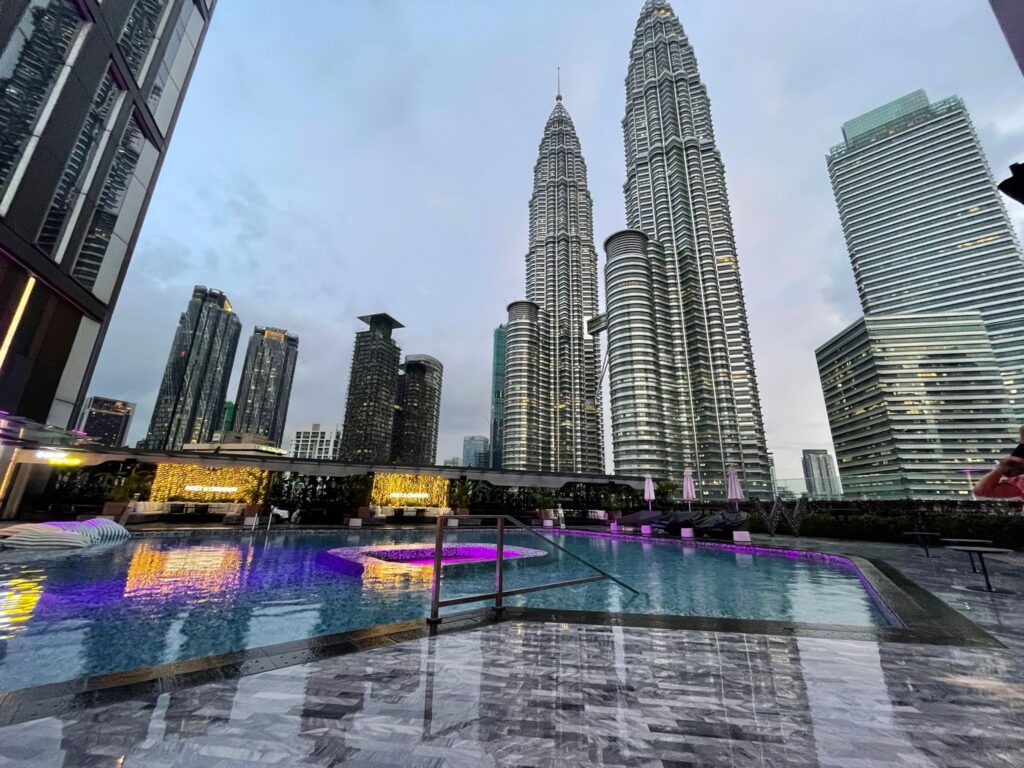
The country presents a wealth of experiences typical of Southeast Asia. It features the bustling, modern city of Kuala Lumpur, as well as charming traditional villages. Malaysia is renowned for its pristine beaches, remote rainforests, and stunning natural beauty, which are abundant in this region.
One of Malaysia’s advantages is the widespread use of English, making it convenient for expatriates to communicate and conduct business effectively. While learning the local language can be enriching, the ability to interact seamlessly in English is enormously beneficial.
Kuala Lumpur is often likened to a mini-Singapore but without the hefty price tag. The city is modern and efficient, and offers world-class business opportunities. The cost of living in Kuala Lumpur is approximately $1,500 a month, which is even lower outside the capital.
Moreover, Malaysia’s strategic location in Southeast Asia is a gateway to other major Asian cities, thanks to its role as the main hub for Air Asia. You can reach numerous destinations within one or two hours, often for less than $100.
In essence, Malaysia offers exceptional value for money, a luxury lifestyle at a fraction of the cost. Many entrepreneurs base themselves in Kuala Lumpur to take advantage of these favourable conditions.
MM2H Visa Rules Announced June 2024 – Key Changes
The updated Malaysia My Second Home (MM2H) visa now features three tiers: Silver, Gold, and Platinum, along with a new category for Special Economic Zones.
Key Changes:
- Income Requirement Eliminated: Previously, applicants needed to demonstrate a monthly income of RM 40,000. This requirement has been removed.
- Liquid Asset Requirement Removed: The prior requirement of RM 1,500,000 in liquid assets is no longer applicable.
- Revised Fixed Deposit Amounts: These amounts have been adjusted according to the program tier. Details follow.
- Lower Minimum Age: The minimum age for eligibility has been reduced to 25.
- Expanded Dependent Eligibility: Visa holders can now bring along spouses, unmarried children up to 34, parents over 60, and parents-in-law.
- Minimum Stay Requirement: Initially proposed to reduce to 60 days, the requirement remains at 90 days.
- Property Purchase Condition: Applicants must purchase property, to be held for 10 years. However, it’s feasible to sell it sooner if upgrading to a costlier property.
- Platinum Tier Adjustment: Previously, this tier included an option for permanent residency, which is now cancelled. Instead, Platinum holders gain full work and investment rights in Malaysia, akin to the PVIP visa.
Additional Features:
- Social Visit Pass: An MM2H visa grants a multiple-entry social visit pass, allowing the holder to reside in Malaysia for the term of the visa, though it is not permanent residency.
- Fixed Deposit Withdrawal: Following visa approval, 50% of the fixed deposit can be withdrawn to cover property purchases, education, medical, or tourism expenses.
- Residency Duration: The permit is valid for 5 to 15 years, depending on the tier. Silver MM2H validity may align with the applicant’s passport duration, suggesting renewal before application to maximise validity.
- Company Ownership: Visa holders can register and own a company in Malaysia. A work visa is needed to participate in daily business operations unless you hold a Platinum MM2H.
- Part-Time Work Eligibility: Applicants over 50 may work part-time, up to 20 hours weekly.
Eligibility Criteria
The main requirements for the Malaysia My Second Home (MM2H) program are as follows:
- Age Requirement: Applicants must be at least 25 years old.
- Malaysian Bank Deposit: After approval, applicants are required to make a deposit into any Malaysian bank. The amount depends on the tier: Silver, Gold, or Platinum. Interest can be earned on this deposit.
- Medical Examination: Applicants must undergo a medical check-up.
- Family Inclusion: Applicants can bring family members at no additional cost.
For the MM2H visa to remain valid, the holder must spend at least 90 days per year in Malaysia.
MM2H – Silver Tier
- Fixed Deposit: USD 150,000 in a Malaysian bank.
- Participation Fee: RM 1,000.
- Property Purchase: Must buy a residential property worth at least RM 600,000. In some areas, such as Kuala Lumpur, the minimum for foreigners is RM 1 million.
- Work Restrictions: Not permitted to work without a separate work permit.
- Domestic Help: Cannot bring a maid.
- Visa Duration: 5-year renewable, multi-entry visa.
MM2H – Gold Tier
- Fixed Deposit: USD 500,000 in a Malaysian bank.
- Participation Fee: RM 3,000.
- Property Purchase: Must buy a residential property worth at least RM 1,000,000.
- Work Restrictions: Not permitted to work without a separate work permit.
- Domestic Help: Cannot bring a maid.
- Visa Duration: 15-year renewable, multi-entry visa.
MM2H – Platinum Tier
- Fixed Deposit: USD 1,000,000 in a Malaysian bank.
- Participation Fee: RM 200,000.
- Property Purchase: Must buy a residential property worth at least RM 2,000,000.
- Work and Investment: Free to work and invest in Malaysia.
- Domestic Help: Entitled to bring a maid.
- Visa Duration: 20-year renewable, multi-entry visa.
MM2H – Special Economic Zone (New Category)
For those interested in residing in the East Coast Economic Region, Northern Corridor Economic Region, or the Johor-Singapore Special Economic Zone:
- Minimum Age: 21 years old.
- Fixed Deposit: USD 65,000 for those under 50; USD 32,000 for those over 50.
- Participation Fee: RM 1,000.
- Property Purchase: Must adhere to the current state minimum thresholds and be purchased directly from a developer.
- Work Restrictions: Not permitted to work without a separate work permit.
- Visa Duration: 10-year renewable, multi-entry visa.
How Does the Sarawak S-MM2H Visa Differ from the Regular MM2H?
Different regions of Malaysia administer the Malaysia My Second Home (MM2H) program with some variations. Sarawak, located in Malaysian Borneo, has relaxed its eligibility criteria compared to the rest of the country.
Key Requirements for Sarawak S-MM2H:
- Monthly Income: RM 7,000 for individuals, RM 10,000 for married couples.
- Fixed Deposit: RM 150,000 for individuals, RM 300,000 for married couples.
- 40% of the deposit can be withdrawn after two years.
- Sponsorship: Must be sponsored by a local resident, who could be a visa agent based in Sarawak.
- Residency Requirement: Must spend at least 30 days per year in Sarawak.
Some individuals using the Sarawak S-MM2H program meet the 30-day requirement in Sarawak and then reside in West Malaysia for the remainder of the year. Although this is currently within the rules, it remains to be seen if this will continue to be acceptable.
Conversion to Permanent Residency or Malaysian Citizenship
Currently, there is no direct path to citizenship through the S-MM2H visa. Foreign nationals can potentially become Malaysian citizens by naturalisation after residing in the country for 10 years, typically geared towards foreign men married to Malay women. However, foreign women married to Malay men may apply for naturalisation after just two years. Notably, dual citizenship is illegal in Malaysia, mandating the renouncement of former citizenship.
Tax Implications for Foreigners in Malaysia
MM2H visa holders are exempt from tax on funds brought into Malaysia from overseas, although income earned within Malaysia is taxed. Under Malaysia’s Income Tax Act, residents do not pay tax on foreign-sourced income. This exemption will expire in 2026, but individuals will remain untaxed on such income if it is not brought into Malaysia. The top marginal tax rate in Malaysia is currently 30% for income over RM 2 million per year. For specific tax advice, it’s recommended to consult a professional.
Other Visa Options in Asia
If the MM2H does not meet your requirements, Southeast Asia offers several alternatives:
- Malaysia: Digital nomad visa suited for entrepreneurs and remote workers seeking shorter stays.
- Indonesia: Second home visa, ideal for those not meeting MM2H’s eligibility.
- Thailand:
- LTR visa allows a 10-year stay.
- Thai Elite visa provides extended residency for those with discretionary funds.
- Philippines: Investment visa offering indefinite residency through local stock market investment.
- Cambodia: Introducing a second home visa with a pathway to citizenship.
These options provide various pathways for residency in Asia, each with unique benefits and requirements tailored to diverse needs.
Some blogs on Thailand Residency here:
Comparison of Residency Options in Southeast Asia
| Country | Visa Type | Cost/Investment | Time to Apply | Requirements |
| Malaysia | Digital Nomad Visa | Processing fees + proof of funds | Several weeks | Proof of remote work or entrepreneurship, sufficient funds |
| Indonesia | Second Home Visa | USD 160,000 bank deposit or property investment | A few months | Significant deposit in an Indonesian bank or property purchase |
| Thailand | LTR Visa | USD 500,000 in bonds/real estate, income of USD 80,000/year, net worth USD 1 million+ | 1-3 months | Investment in Thailand, high income/net worth requirements |
| Thai Elite Visa | THB 900,000 to 2 million | 4-6 weeks | One-time membership fee for 5-20 years | |
| Philippines | Investment Visa | USD 75,000 investment | 1-2 months | Investment in local stock market or government bonds |
| Cambodia | Second Home Visa | USD 100,000 property investment | TBD | Property investment and integration requirement |
Notes:
- Malaysia Digital Nomad Visa: Designed for entrepreneurs and remote workers, requiring proof of employment and financial stability, ideal for flexibility in stay duration.
- Indonesia Second Home Visa: Requires a substantial financial commitment through a bank deposit or property purchase, catering mainly to those looking to secure medium-to-long-term residence.
- Thailand LTR Visa: Focused on high-net-worth individuals or professionals, involving a substantial financial investment in Thailand and proof of steady income and significant net worth.
- Thailand Thai Elite Visa: Offers long-term stay in exchange for a significant one-time fee, starting at THB 900,000, offering convenience without direct investment obligations.
- Philippines Investment Visa: Offers a path to indefinite residency through investment in financial markets, attractive for those desiring permanence without frequent renewals.
- Cambodia Second Home Visa: Requires a property investment and potentially allows a pathway to citizenship, offering a new option in the region.
Who is the MM2H Visa Ideal For?
The Malaysia My Second Home (MM2H) program is designed for wealthier expatriates and self-funded retirees wishing to establish residency in Malaysia. It is particularly suitable for individuals seeking residency in a relatively developed country with a British colonial heritage and a strong English-speaking community.
Malaysia’s strategic location near Singapore positions it well within a rapidly developing region, appealing to those interested in leveraging opportunities in Asia. The program is well-suited for individuals willing to spend at least three months each year in Malaysia, making it ideal for those looking to establish a genuine offshore base in Asia. Whether your goal is to build a business or simply enjoy life in a vibrant, multicultural Asian city, the MM2H program offers a compelling option.
If you need assistance with the ‘Malaysia My Second Home’ visa or any other related matter, feel free to contact me using the button at the bottom of the page or via my contact page.
Helpful blogs:
- Is Malaysia a Good Place To Live as an Expat
- 5 Best Cities in Southeast Asia for Digital Nomads Earning Over $100k in 2024
- 3 Residency Programs – High Net Worths
Yes. A significant change for 2026 is that all mainland MM2H tiers (Silver, Gold, and Platinum) now require a mandatory residential property purchase. The minimum purchase price scales with your tier: RM 600,000 for Silver, RM 1 Million for Gold, and RM 2 Million for Platinum. This property must be held for a minimum of 10 years, although you are permitted to “upgrade” to a higher-value property during this period. For those who do not wish to buy property, the Sarawak S-MM2H remains a popular alternative as it currently does not mandate a property purchase.
In 2026, the mainland MM2H program has largely moved away from the RM 40,000 monthly offshore income requirement that characterised the 2021–2023 era. Instead, the government now prioritises the Fixed Deposit (FD) amount. For example, the Silver tier requires a $150,000 USD deposit regardless of your monthly earnings. This is excellent news for retirees who have significant savings but lower monthly pension distributions. Note that the Sarawak S-MM2H still offers an income-based route (approx. RM 10,000/month for couples), making it the preferred choice for those who prefer to keep their capital liquid.
The 2026 rules have introduced age-based flexibility regarding the 90-day stay requirement. If you are under the age of 50, you must spend a cumulative 90 days per year in Malaysia to maintain your visa. However, for those aged 50 and above, the minimum stay requirement is currently waived for most mainland tiers. This makes Malaysia a perfect “Plan B” destination for older expats who want the security of a long-term visa (up to 20 years for Platinum) without the obligation to live in the country full-time.
Free tools for this topic
All free tools →Free, no sign-up, nothing stored.

Henry Temple-Baxter
Henry Temple-Baxter is the founder of Investments for Expats and is CISI Level 4 qualified. A long-term expat himself, he has lived and worked in Kuala Lumpur, Beijing, Bangkok, Hong Kong and Ho Chi Minh City. He set up the firm in 2018 to give UK expats fee-only, transparent advice on pensions, tax and investing abroad.
This guide is general information, not personal advice. Tax rules can change and their effect depends on your circumstances. Capital at risk.