
How to Make the Most of Your Higher Salary
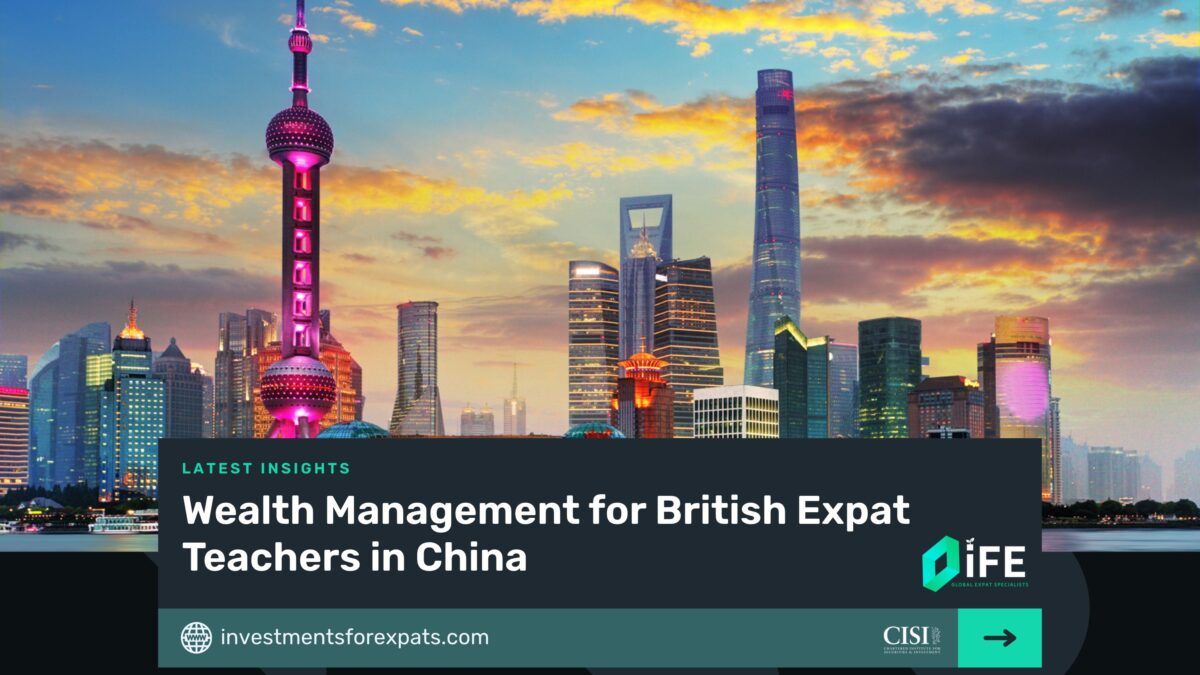
For many British teachers, moving to China is one of the best financial decisions they will ever make. I frequently speak to expat teachers who want to save and invest a portion of their income for later in life. Some may go down the pension route; others prefer a pot which is invested over the long term.
Unlike teachers in the UK, expat teachers can have higher disposable incomes because a lot of costs may be covered and salaries are higher; however, not all contracts come with pensions. Teachers also generally move around quite a lot, which requires a pot which is portable.
International schools across Beijing, Shanghai, Shenzhen, Guangzhou and other major cities continue to offer attractive compensation packages, often including accommodation, flights, medical insurance and annual bonuses. In many cases, experienced teachers can earn the equivalent of £60,000–£100,000+ per year, while enjoying a lower cost of living than they would in the UK.
The downside, however, is that unlike teaching in Britain, most international schools do not provide a generous defined benefit pension or meaningful long-term retirement scheme. While the salary is significantly higher, much of the responsibility for retirement planning falls on the individual.
This means that expat teachers need to think differently. Rather than relying on an employer pension, they need a strategy that allows them to build wealth, remain flexible and continue investing wherever their career takes them.
If you have any questions, you can contact me through my contact page. You can also view our Expat Teacher service page to see how we support expat teachers.
The Biggest Mistake Expat Teachers Make
One of the biggest mistakes I see is teachers focusing entirely on their salary while neglecting long-term investing.
Many accumulate substantial cash balances in their bank accounts, hoping to “invest later” when they eventually return to the UK.
Unfortunately, this often means missing years of potential investment growth.
Another common mistake is purchasing expensive offshore savings plans sold by commission-based advisers. These products are often marketed as pension alternatives but can significantly reduce long-term investment returns through high fees and restrictive contract terms.
Why Flexibility Matters
Teaching internationally rarely follows a straight path.
You might spend:
- Four years in China
- Three years in Thailand
- Two years in Singapore
- Five years in the Middle East
- Then eventually retire back to the UK
Your investment solution should be able to move with you.
This is one of the biggest advantages of modern international investment platforms.
Unlike many traditional pension products, they are designed specifically for internationally mobile professionals.
Investment Platforms Instead of Traditional Pensions
For many British expat teachers, an international investment platform can provide many of the same long-term benefits as a pension while offering significantly greater flexibility.
Platforms such as Ardan International, Morningstar Wealth Platform and Novia Global allow you to invest in globally diversified portfolios without locking your money away until retirement.
Your investments remain yours at all times.
You decide when to contribute, when to withdraw and how much to invest.
For teachers whose careers may involve several countries over the next twenty or thirty years, this flexibility can be invaluable.
Why I Like Ardan for International Teachers
Personally, Ardan International is often my preferred platform for internationally mobile clients.
It is based in the Isle of Man, one of the world’s most established offshore financial centres.
Client assets are held separately from the company’s own assets, and the platform operates under the Isle of Man Financial Services Authority. It also benefits from the Isle of Man policyholder protection framework, providing an additional level of comfort for investors.
The platform offers:
- Multi-currency investing
- Access to thousands of ETFs and investment funds
- Global equity investments
- Fixed income investments
- Structured products
- Cash management
- Estate planning flexibility
Perhaps most importantly, there are no long-term lock-in periods.
If your circumstances change, you retain access to your investments.
Investing Like a Pension: Without Pension Restrictions
Many teachers ask whether an investment platform is “like a pension.”
In many ways, it can be.
Instead of making monthly pension contributions, you simply invest regularly into your portfolio.
The investments grow over time, can be rebalanced as your retirement approaches and eventually provide an income during retirement.
The difference is flexibility.
Traditional pensions generally restrict access until minimum pension age and operate under changing government rules.
An international investment platform allows you to remain in control while still investing for the long term.
Keep It Simple
One misconception is that successful investing requires complicated portfolios.
In reality, many experienced investors simply use globally diversified ETFs.
For example:
- Global equity ETF
- Global bond ETF
- Cash or money market fund
That’s often enough.
These funds provide exposure to thousands of companies across the world while keeping costs extremely low.
Trying to predict which country or sector will outperform each year rarely produces better long-term results than maintaining a disciplined diversified portfolio.
Why Costs Matter
Investment costs are one of the few things investors can control.
Even seemingly small differences become significant over twenty or thirty years.
Fortunately, modern adviser platforms are very competitive.
Typical platform costs are generally between 0.20% and 0.40% per year, depending on portfolio size.
Low-cost ETFs may cost only 0.10%–0.25% annually, meaning your total investment costs can remain well below 1% before any agreed adviser fee.
Over decades, these savings can translate into tens or even hundreds of thousands of pounds.
Be Careful of Offshore Savings Plans
Unfortunately, not every product marketed to expats represents good value.
Teachers are frequently approached by advisers promoting offshore savings plans from providers such as RL360, Investor Trust, Friends Provident International and similar insurance companies.
It is important to distinguish between investment platforms and long-term regular savings plans.
The savings plans themselves are not inherently bad products, but many were designed around commission-based distribution models.
As a result, they often include:
- High establishment charges
- Significant ongoing product fees
- Early surrender penalties
- Lock-in periods of 10–25 years
- Reduced flexibility if your circumstances change
In many cases, total costs can reach 3–4% per year or more, particularly once adviser commission and underlying fund charges are included.
That level of cost creates a considerable hurdle for investors to overcome before achieving attractive long-term returns.
For someone simply investing in global ETFs, these structures are often unnecessarily expensive.
By comparison, a modern investment platform generally offers:
- No entry charges
- No exit penalties
- No mandatory contribution period
- No long-term lock-in
- Much lower annual costs
- Greater transparency
For many internationally mobile teachers, this is simply a more efficient way to invest.
Tax Planning
Another advantage of using an international investment platform is tax flexibility.
Many British teachers spend much of their career living in jurisdictions with relatively favourable tax systems.
Holding investments within an internationally recognised platform can make it easier to continue investing while moving between countries.
However, tax rules differ significantly between jurisdictions and change regularly.
Your investment structure should always take into account your country of residence, future plans and eventual retirement location.
Professional advice can be particularly valuable if you expect to move several times during your career.
Estate Planning
Many teachers also overlook estate planning.
Platforms such as Ardan provide options for beneficiary nominations and can integrate with broader estate planning arrangements where appropriate.
As wealth grows, these considerations become increasingly important, particularly for expats with assets in multiple countries.
My Advice to Expat Teachers
If I could give advice to every British teacher moving overseas, it would be this:
- Start investing early and keep your costs low.
- You do not need an overly complicated portfolio.
- You do not need expensive investment products.
- You do not need to chase the latest investment trend.
A simple globally diversified portfolio invested consistently over many years has historically been one of the most effective ways of building long-term wealth.
Choose a platform that is flexible enough to move with your career, keep your annual costs under control and avoid products that lock your money away unnecessarily.
Final Thoughts
Teaching internationally offers an incredible opportunity not only to experience different cultures but also to accelerate your financial future.
Higher salaries, generous benefits and lower living costs can create a level of disposable income that many teachers would struggle to achieve in the UK.
The key is making that income work for you.
For most British expat teachers, a low-cost international investment platform such as Ardan International, Morningstar Wealth Platform or Novia Global provides a flexible, transparent and cost-effective solution. Combined with a diversified portfolio of low-cost ETFs, it can deliver many of the long-term benefits people associate with pensions while allowing you to remain in control of your money throughout your international career.
At the same time, be cautious of high-cost offshore savings plans that rely on long lock-in periods and commission structures. While they may be suitable in certain niche situations, they are often not the best solution for teachers simply looking to build wealth over the long term.
Ultimately, successful investing is rarely about finding the perfect product. It is about investing consistently, keeping costs low, remaining diversified and allowing time for compounding to work. For internationally mobile teachers, those principles are far more valuable than any complex investment strategy.
Other blogs which can help you as an expat teacher:
- Expat Teachers in China Guide
- Saxo Bank Platform Review for Expats
- The Best Investment Platforms for Expats in Thailand (2026)
Free tools for this topic
All free tools →Free, no sign-up, nothing stored.

Henry Temple-Baxter
Henry Temple-Baxter is the founder of Investments for Expats and is CISI Level 4 qualified. A long-term expat himself, he has lived and worked in Kuala Lumpur, Beijing, Bangkok, Hong Kong and Ho Chi Minh City. He set up the firm in 2018 to give UK expats fee-only, transparent advice on pensions, tax and investing abroad.
This guide is general information, not personal advice. Tax rules can change and their effect depends on your circumstances. Capital at risk.