In this article want to sum up some of the platforms that are advisor lead in the offshore space so you know if you are getting a good deal or paying too much and if they are ultimately right for you.
As always, if you want to ask more questions or speak to me about platforms and investing, please email me at info@investmentsforexpats.com
Offshore Bonds
Note that all these are at the base cost so if you are getting quoted any more than the quotes in the table below this is purely for commission and would stay away.
For example, if anyone quotes an RL360 PIMMs on a 1% a year this would be a 7% upfront commission to the advisor that would be taken yearly out of your policy.
Anyone that offers this means it is highly illiquid as it charged the 1% on the initial premium.
So, for example, if you put in $100,000 and charged 1% over a 10-year period and if you were to take $50,000 out of the bond after year 3 you would still be getting charged 1% of $100,000 (plus the admin charge of normal $500 a year) this equating to 2.5% of the charges without taking into advisor and trading fees or fund fees. I have unfortunately seen this too often not explained by people selling the bonds.
These are done on a 10-year establishment period (if possible) but note these can come in 5, 8 and other establishment charges.
| Bond Name | Commission-based | Base charge (without commission) | Admin charge | Dealing Charge | Lock-in periods and exit charges | Establishment period |
| RL360 PIMMs | Yes | 0.67% | 400 GBP | First 10 free then 45 GBP | Yes 0.67% per year for every year within the establishment | 10 years |
| Custodian Life | Yes | 0.36% | 350 GBP | 45 GBP | Yes 0.36% for every year taken out early of the establishment period | 10 years |
| Investors Trust Access portfolio 5000 | Yes | 0.35% (base cost for the first 5 years) | 450 GBP | 40 GBP | 0.35% a year for every year taken out early | 5 years |
| Investor Trust Assess portfolio plus | No (but the advisor gets 0.5% a year on the charges) | 1% | 220 GBP | 40 GBP | No | No |
| Momentum | No | 0.65% (going down to 0.45% on larger cases on progressive bases) | N/A | 45 GBP | No | No |
| Hansard 1Z | Yes if anything over 1% upfront | 1% upfront | N/A | 25 GBP | No | No |
| Quilter International Executive bond | Yes | 0.95% | 450 GBP | 18 GBP | For the 10 year period reduces 0.23% a quarter | 10 year period |
This is meant to be a brief summary of the bonds and charges and is fully aware that have not put all the bonds in like Providence life and Hansard 5000/8000, Investors trust 8000, Utmost.
However, to be honest I don’t think these are even worth a mention as they are either not used that much or have been taken over and merged.
In the case of Providence is just an awful option for me personally and I challenge anyone to show me why it’s feasible.
Also, note that I have missed out on vital factors such as jurisdiction of protection, platform, and fund options. But, for most of these bonds, I have done individual articles explaining these aspects that you can read in my article section.
Blog – Link to take you to all my blogs.
Offshore Bonds Overview
In short, all of the bond options allow going into expensive upfront charged funds and do not have or are unlikely to have FCA regulations.
Unless given rationale and you have seen the fees of the funds before I would stick to low-cost ETFs or low-cost active funds. MAKE SURE YOU LOOK THE FUND UP ON MORNING STAR USING THE ISIN BEFORE INVESTING IN THEM. You should not be paying more than 1% per year for the fund.
Some of the funds to be aware of
- Tilney
- GAM
- Emeraits
- DVAM
From my study on the bond cost, here is what I found.
For the bond charges to show a clearer picture I have put together an in-depth excel spreadsheet cost analysis in more detail of the bonds above and more at base cost and commission cost on all of the offshore bonds. Putting aspects such as opting for 2 trades a year and showing the fees over a 10 and 20-year period.
What I found from my cost analysis
For larger amounts over $500,000 for a 20-year period at the base cost these can become effective options as with many of these options only the admin cost is charged after the establishment charge is over.
Charges can fall as low as 0.5% average on $200,000 in a 20-year time period. However, this would need to take on low trades and hold without taking any money for a 20-year time frame. This did not take into consideration advisor or fund fees.
Summary of Bonds
In summary, anyone charging over the price stated on the table above is doing it based on pure commission and would stay clear of any advisor doing this. If you need more information, please read some of my reviews.
I would only go into the bonds if you have a specific reason to go into them, you fully understand the logistics of how they operate and have a sound rationale to go in them over a platform, which I will come onto later as they much lower charges.
Personally, I would only be inclined to use a fee-based offshore bond if you are looking to use it for a specific reason I.E tax reasoning. Please read my articles on offshore bonds that explain the logistics of this) such as the Hansard 1Z at 1% upfront and 412 GBP a year or Momentum at 0.65%.
When Should I Use Bonds?
This will not and is not specific or personal advice but generally, offshore bonds are used for larger amount anything over $500,000 (due to the admin charges alone being $500 a year). This has been shown in my cost basis study of the bonds suggesting that a 10-year establishment period is only relevant for 20 years plus.
Thus only long to medium-term investors who can lock their money away for 10 years without withdrawing.
Also for those investors going to high tax locations such as the U.K, or Australia before you set up the bond and look to withdraw (read my articles on the tax on bonds for that) in the high tax location that has tax advantages on offshore bonds.
If you do not fit this criterion or you are already based in a low-tax location and looking to stay for the foreseeable future my opinion is that you should stay away from bonds as platform options are much cheaper and much more flexible
How Do I Know If I Am Being Charged Commission?
Normally, these bonds are complex and need a maths genius to see the underlying costs as the commission is hidden.
This is what makes them so easy to have hidden commissions, as shown in the table above, most of the bonds can have commissions as high as 7% upfront. Even if the commission is not charged upfront it can be taken on the funds that have upfront costs.
Most of the commission will be taken if you have a high yearly fee that reduces over the establishment period. For example, where it reduces by 1% a year over the 10-year period (as seen below) a 7% upfront commission charge has been charged and this will be taken out of your policy on a quarterly basis to pay the advisor fees over the 10 year period.
What Bonds Should I Use to Stop Commission?
Again this is subjective but for me personally using Hansard 1Z and Momentum is based on the open architecture platform, the platform itself and the protection. That base cost of 1% upfront on Hansard and 412 GBP a year. The 0.65% on Momentum with no lock-in period.
I am not getting paid to say this and have no bias for either one but they are fee-based and have no lock-in periods thus are better options for investors.
I will acknowledge that they are more expensive than platforms but as I’ve said before they can have their uses. As seen in the table below from an Australian tax residence with $200,000. Finally, if you are using a bond get an advisor to justify this for you.

Figure 1: Is the charge of 7% commission based RL360 PIMMs
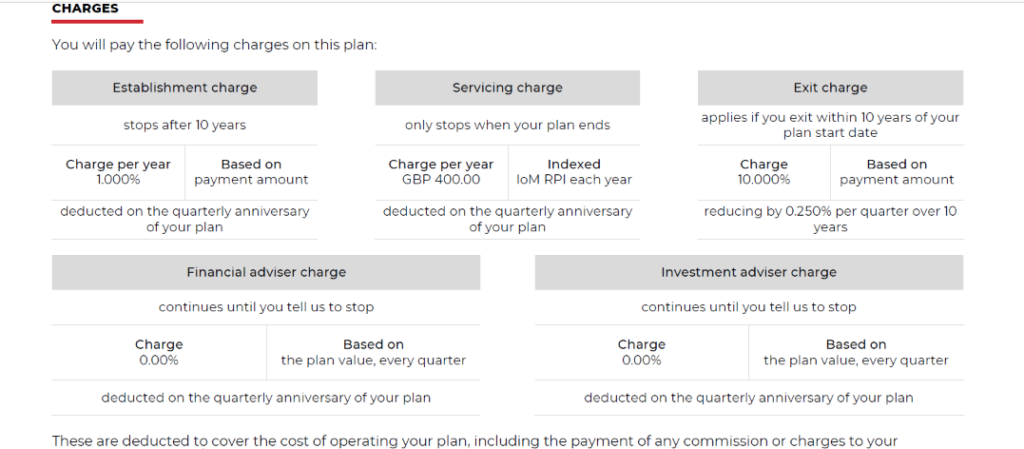
Figure 2: Is the base cost of RL360 PIMMs

How Do They Compare to Platforms?
I will do a table of the main advisor lead offshore investment platforms as it can be seen that these are a lot cheaper and more flexible for investors, however, please make sure you seek qualified advice before reaching any decisions. This is not personal advice, if you do need advice, please speak to a competent and qualified advisor.
Again this is not an in-depth analysis but if you search on my blogs I have written a number of articles on these platforms.
| Platform name | Charges | Dealing charges | Clean funds only | Lock-in periods |
| Novia Global | 0.34% (going down 0.05% for every $500,000 to $2 million 0.1%) | 5 GBP for stocks and funds | Yes, FCA regulation allows for only fee-based | No |
| Praemium | 0.34% dropping 0.07% for every $250,000 to $5 million at 0.03% | 4 GBP | Yes clean funds only | No |
| Ardan International | 0.4% | 5 GBP for stocks and funds | No fees can be charged on funds and a spread on the entry of funds | No |
These are the most popular ones for advisors. As you can see these are much cheaper than bonds and in the case of Novia and Praemium they are only fee-based. Thus don’t need to be worried about going into funds charging the advisor high fee-based funds.
Although, these don’t have the tax benefits that bonds are “sold” on they are much cheaper and flexible and from my experience advising clients more suitable for a high percentage of investors.
Things to watch out for in fee-paying funds on Ardan, again look up the ISIN number and only go into low-cost are well-known active funds.
https://www.praemium.com/media/4755/pil-due-diligence-2021.pdf
Things to note, if you are returning to a high-tax country and have these platforms they still might be worth having as platforms such as Ardan as they have tax planning aspects, if you are going back to the U.K. read my article on that.
British Expats Returning To The U.K.
Summary
As shown above, bonds are much more expensive than platforms that are luckily getting used a lot more for clients in places such as the UAE and Europe.
Although, in places such as Southeast Asia bonds are still commonly sold to clients and hopefully this can shed some light on them. If you have seen advisors make sure you know how they are compensated. If they say they work for free this is a big warning sign and I would personally consider staying well away.
If you have been suggested bonds as an investment then it’s good to know how much you are charging and why it has been selected over a platform. You will also need to know what is the base cost of the offshore bonds and the rationale for going in them over a platform.
In terms of what is best as an expat, then there isn’t really a deadset winner and the reason for this is because of personal circumstances and preference.
If you have any questions please email me at info@investmentsforexpats.com