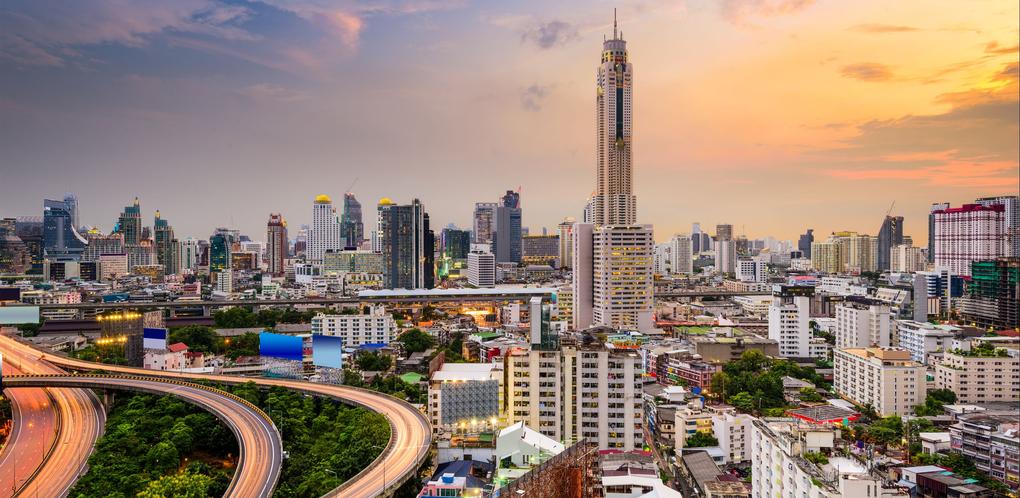
If you’re thinking about buying a condo in Thailand purely for investment purposes, the best opportunities have likely come and gone.
I say this as an expat who has lived in Southeast Asia for 10 years and recently purchased a condo in Thailand in the last two years. As Thailand is my base and will be for the foreseeable it made sense to purchase a condo; however, at the time, there were a lot of options to consider, so many that there were several left empty until they were sold. These made it a buyer’s market for expats, and the prices weren’t too bad; they had been increasing because of the popularity, and now I fear the value is harder to find.
That’s not to say real estate in Thailand isn’t attractive—far from it. Bangkok remains one of the most visited cities in the world, and many foreigners naturally gravitate toward investing in places they know. If you had bought a condo here a decade ago, you would have likely seen strong returns, with Thai condo values roughly doubling over that period. However, the same growth trajectory isn’t guaranteed for the foreseeable future.
That being said, there are still opportunities to find a great deal—if you do your research. I recently bought a condo in Bangkok, but not as an investment. I bought it to live in, not to flip for a profit. I chose a well-established condo brand with a strong reputation, and while there were some legal issues surrounding the land, this allowed me to purchase at a significant discount. Since then, the value of my condo has risen by about 20%, proving that good deals do exist. But you have to put in the effort to find them.
If you have any questions, please contact me using the button at the bottom of this page or through my contact page.
Articles I have written on Thailand:
- Thailand 2024 Tax Reforms Explained
- The Path to Permanent Residency in Thailand
- How to Transfer UK Pension to Thailand
The Demographic Challenge
The World Bank estimates that Thailand’s working-age population will shrink by about 10% between 2010 and 2040. This means fewer people will be in the workforce, leading to slower economic growth unless productivity dramatically improves. Unlike developed countries that have offset declining birth rates with advanced technology and automation, Thailand remains an emerging market and does not have the same economic buffer.
As the working-age population declines, wages and production costs will rise, making goods and services more expensive. Meanwhile, Thailand’s neighbors—such as Malaysia and Cambodia—continue to benefit from a younger, expanding workforce that keeps labor costs lower and economic growth more dynamic.
What This Means for Real Estate
When evaluating real estate investments, supply and demand are key. In Thailand, the supply of condos is increasing, but demographic trends suggest that demand could face long-term downward pressure. That’s not a recipe for strong capital appreciation.
Does this mean you shouldn’t buy property in Thailand? Not necessarily. If you’re buying a condo to live in and you do your due diligence, you can still find great deals. But if your goal is pure investment, you may want to consider other Southeast Asian markets where economic and demographic trends are more favorable for long-term growth.
Bangkok’s condominium market exhibits significant variation in pricing, inventory, and absorption rates across different areas. Here’s a comprehensive overview:
Average Condominium Prices by Area
Condominium prices in Bangkok vary notably based on location. Here’s a breakdown of average prices per square meter in key areas:
| Area | Average Price (THB/sq m) |
|---|---|
| Central Business District | 239,504 |
| City Fringe | 85,000 |
| Suburbs | 67,950 |
Note: Prices are approximate and based on data from Q3 2024. Retalk Asia
Unsold Condominium Inventory
The rate of unsold condominium units varies across Bangkok’s regions:Bangkok Post
| Area | Unsold Inventory Rate (%) |
|---|---|
| Central Business District | 12.8 |
| City Fringe | 22.5 |
| Suburbs | 64.7 |
Note: Data reflects the situation as of Q3 2024. Retalk Asia
Absorption Rates by Area and Price Range
Absorption rates, indicating the pace at which available condominiums are sold, also differ by area and price range:
| Area | Price Range (THB) | Absorption Rate (units/month) |
|---|---|---|
| Ram Intra-Min Buri | ~2.89 million | 7–12 |
| Bang Khae-Phetkasem | ~2.99 million | 7–10 |
| Bang Na-Bang Bo | ~2.49 million | 4–9 |
| Phutthamonthon-Sala Ya | ~2.5 million | 2–9 |
| Rangsit-Pathum Thani | ~2.39 million | 5–8 |
Note: Data pertains to townhouse absorption rates in outer Bangkok areas as of Q4 2024. Bangkok Post+1Bangkok Post+1
Property Price to Income Ratio
While specific data on the property price to income ratio in Bangkok is limited, it’s generally observed that urban areas with high property prices often have higher price-to-income ratios, indicating that properties are less affordable relative to average incomes. Prospective buyers are advised to consider their financial capacity and consult local real estate experts when evaluating property investments.
When considering condominium investments in Southeast Asia, particularly in Bangkok, Thailand, and Kuala Lumpur, Malaysia, it’s essential to evaluate factors such as property prices, rental yields, and associated taxes. Here’s a comparative overview:
Property Prices compared to KL
| City | Average Price (USD/sq m) |
|---|---|
| Bangkok | 2,000 – 2,500 |
| Kuala Lumpur | 702 |
Note: Prices are approximate and based on recent market analyses.
Rental Yields
| City | Average Gross Rental Yield (%) |
|---|---|
| Bangkok | 4.0 – 5.0 |
| Kuala Lumpur | 4.0 – 5.0 |
Note: Rental yields can vary depending on the property’s location and type.
Property Taxes
| City | Rental Income Tax Rate (%) | Capital Gains Tax Rate (%) |
|---|---|---|
| Bangkok | 15 | 0 |
| Kuala Lumpur | 20 (Residents) / 25 (Non-Residents) | 5 – 30 (Variable based on holding period) |
Note: In Thailand, rental income is taxed at a flat rate of 15%, and there is no capital gains tax. In Malaysia, residents face a 20% rental income tax, while non-residents are taxed at 25%. The capital gains tax, known as Real Property Gains Tax (RPGT), varies between 5% to 30% based on the property’s holding period.
Price-to-Income Ratio
| City | Price-to-Income Ratio |
|---|---|
| Bangkok | 27.81 |
| Kuala Lumpur | 7.83 |
Note: A higher price-to-income ratio indicates less affordability.
Analysis
While Bangkok’s condominium prices are higher, both cities offer comparable rental yields. However, Malaysia imposes higher taxes on rental income and capital gains, which could impact net returns. Additionally, Bangkok’s higher price-to-income ratio suggests properties may be less affordable relative to local incomes compared to Kuala Lumpur.
Investors should conduct thorough due diligence, considering both market conditions and tax implications, before making property investment decisions in these markets.
Are Thai Condo Prices Justified?
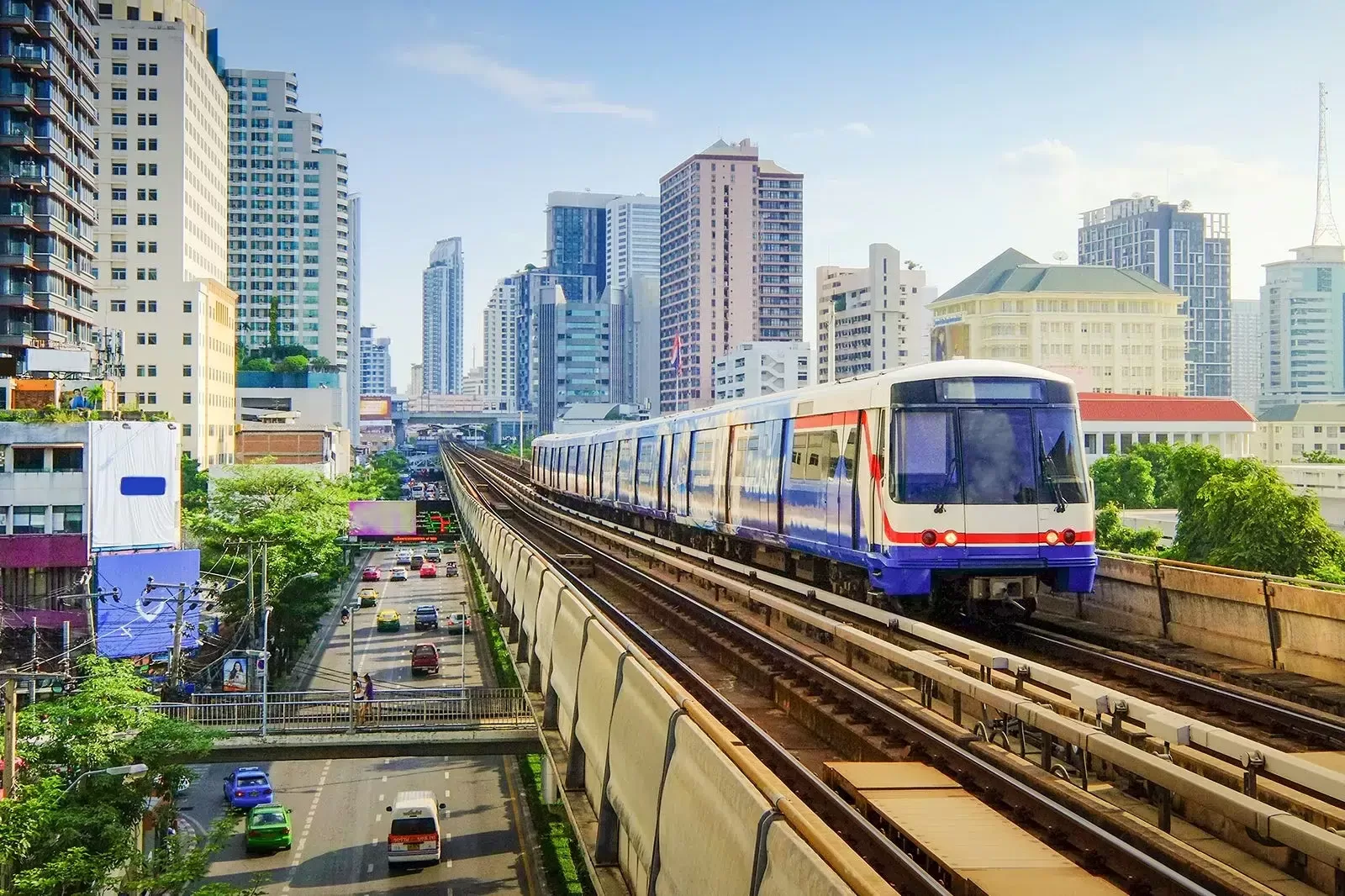
Let’s be honest—Thailand isn’t some undiscovered real estate goldmine that offers something unique and irreplaceable. Yet, despite this, Bangkok’s condominium market has become increasingly expensive, often without strong fundamentals to support such high valuations.
Finding a centrally located condo in Bangkok for less than $7,000 per square meter is a challenge, especially if you want to be within walking distance of a BTS station. In contrast, if you look beyond the usual hotspots, Kuala Lumpur offers similar condominiums for just $3,000 to $4,000 per square meter.
This price gap is striking, especially considering that Kuala Lumpur is geographically close to Singapore, one of the world’s most expensive cities, where condos in prime areas start at $15,000 per square meter. Given this context, Bangkok’s prices begin to seem inflated, particularly when you factor in Thailand’s economic trajectory.
Real Estate as a Long-Term Commitment
Buying property isn’t a short-term play. Liquidity in the Thai real estate market is low, and selling a condo can be a lengthy and complex process. Investors need to be prepared for a long holding period, making it even more important to evaluate whether Bangkok’s real estate market has strong long-term potential.
Putting it simply, if you want to buy a condo, make sure you are planning on having it for a long time because selling a condo in Thailand can take a while. Especially with the amount being built. It amazes me every time I go out for a run, they are always building.
Thailand’s Economic Challenges
For property values to appreciate meaningfully over time, a country’s economy must evolve in ways that increase the purchasing power of its citizens. Unfortunately, Thailand faces several structural challenges that make this scenario unlikely.
Thailand is currently trapped in the “middle-income trap.” Labor costs are rising, making it less competitive for low-end manufacturing, yet the country hasn’t transitioned into a high-tech service economy like Singapore or South Korea. Without significant reforms, this stagnation is likely to persist.
Moreover, Thailand’s population remains predominantly rural, and urban migration is seasonal rather than permanent, largely driven by short-term tourism demand. This reduces the long-term housing demand needed for sustained price growth.
The Debt Problem
Another red flag is Thailand’s high household debt, which currently stands at around 80% of GDP. This figure is significant because it suggests that a large portion of the population is already financially stretched, leaving little room for additional borrowing to support rising property prices.
Moreover, official statistics may underestimate the real debt burden, as many lower-income individuals rely on informal lending sources that charge high interest rates and operate outside the formal banking system.
Is Tourism a Safety Net?
Some argue that Thailand’s booming tourism industry will help sustain economic growth and real estate demand. However, Thailand is already one of the world’s most visited countries, meaning that tourism has likely already peaked in its economic impact. Unless there are substantial increases in high-value tourism, relying on this sector to drive property appreciation may be overly optimistic.
Urbanisation & Demand: The Missing Link
For real estate prices to rise sustainably, a country needs a strong, expanding urban population with increasing purchasing power. However, in Thailand, urban migration is limited, and many who do move to cities are seasonal workers, not long-term residents.
Even for those who settle permanently in Bangkok, the high levels of household debt mean they struggle to take on additional loans to purchase property. Without sufficient demand from local buyers, Bangkok’s real estate market could become increasingly reliant on foreign investors—a risky and unsustainable model, particularly if government regulations tighten.
Bangkok vs. Kuala Lumpur: A Comparative Look
To better illustrate why Bangkok’s condo prices may be overvalued, let’s compare key real estate metrics with Kuala Lumpur:
| Metric | Bangkok, Thailand | Kuala Lumpur, Malaysia |
|---|---|---|
| Average Condo Price (City Center, per sq.m.) | $7,000+ | $3,000 – $4,000 |
| Gross Rental Yield (%) | 4.0 – 5.0% | 4.0 – 5.0% |
| Rental Income Tax | 15% | 20% (Residents) / 25% (Non-Residents) |
| Capital Gains Tax | 0% | 5% – 30% (based on holding period) |
| Price-to-Income Ratio | 27.8 | 7.8 |
| Urban Population Growth Rate | 1.3% | 3.4% |
| Household Debt (% of GDP) | 80% | 67% |
| Ease of Property Ownership for Foreigners | Limited to condos, strict quotas | Foreigners can buy landed property, more flexible ownership rules |
Conclusion
Despite my strong ties to Thailand, when evaluating real estate purely as an investment, the fundamentals make it difficult to justify Bangkok’s current condo prices. With high valuations, slower economic growth, and rising household debt, the long-term upside appears limited compared to other markets in the region.
For an investment in the $250,000–$500,000 range, I would be more inclined to explore alternative opportunities in Asia and the Middle East. Dubai and Ras Al Khaimah (RAK) in the UAE offer strong rental yields, tax advantages, and dynamic economic growth. Malaysia, including Kuala Lumpur, Penang, and Johor Bahru, presents more affordable entry points, better price-to-income ratios, and favorable foreign ownership laws.
While Thailand still has niche opportunities, especially for those willing to do extensive research, the current market conditions suggest that other regional cities may offer better long-term value and investment potential. Personally, I will be focusing my search on markets with stronger economic fundamentals, higher rental yields, and better long-term growth prospects.
Articles close to this one, which I have written for expats:
- Bali Residency Options: A Comprehensive Guide
- 3 Residency Programs – High Net Worths
- Best Investment Platforms for Expats in 2025
The primary challenge is the massive oversupply of new developments. In Thailand, locals and developers prioritise “brand new” units, meaning older condos (even those just 5 years old) often see significant price stagnation or decline. For an expat, this creates a liquidity trap; while it is easy to buy a new condo, finding a buyer in the secondary market can take years unless you are willing to accept a substantial discount.
Thailand’s shift to taxing all foreign-sourced income brought into the country (as of 2024/2025) has changed the math for property owners. If you use offshore funds to maintain your Thai property or bring rental income from other global assets into Thailand to live on, you may face personal income tax on those remittances. In 2026, it is vital to structure your property purchase within a wider global tax plan to avoid being “double-taxed” on the funds used to purchase or maintain the asset.
Obtaining a mortgage from a Thai bank as a non-resident remains extremely difficult. While a few international banks (like UOB or ICBC) offer “Offshore Thai Property Loans,” the interest rates are typically much higher than UK or US rates (often 6%–8%+). With rental yields in Bangkok and Phuket often averaging only 3%–5%, the “cost of debt” usually outweighs the income, making cash purchases the only viable route for most, which unfortunately ties up a large amount of liquid capital in an illiquid asset.