
Recessions are an inevitable part of the economic cycle. Whether triggered by global pandemics, geopolitical tensions, trade wars, or inflationary shocks, downturns often bring fear and uncertainty to financial markets. Yet, some of the most successful investors have built their wealth by understanding how to navigate these stormy waters and even capitalise on them.
This article expands on a fundamental question: Where should you invest during a recession? We’ll explore historical patterns, examine current trade and geopolitical dynamics, and offer actionable investment strategies supported by data, references, and real-world examples.
Understanding Recessions: A Quick Primer
A recession is typically defined as two consecutive quarters of negative GDP growth. These periods are often marked by rising unemployment, reduced consumer spending, declining business investment, and stock market volatility.
Some of the most notable recessions in modern history include:
- The Great Depression (1929–1939): A severe and prolonged economic collapse that began after the 1929 stock market crash. Unemployment peaked at over 25% in the U.S.
- The Oil Crisis Recession (1973–1975): Triggered by the OPEC oil embargo, leading to stagflation—high inflation and high unemployment.
- The Dot-com Bust (2001): Overvaluation of tech stocks led to a market crash and brief recession.
- The Global Financial Crisis (2007–2009): Sparked by subprime mortgage defaults and the collapse of major financial institutions, leading to a deep global downturn.
- The COVID-19 Recession (2020): A health crisis that forced global lockdowns, disrupting supply chains and slashing demand across sectors.
If you have any questions, please contact me using the button at the bottom of the page or through my contact page.
Blogs I have written on a similar topic:
- Thailand Residency Guide
- Offshore Bonds vs Global Platforms
- 2025: Malaysia My Second Home (MM2H) Visa
- Morningstar SIPP Review 2025
How Stocks and Assets Have Historically Performed in Recessions
While each recession has its unique triggers, patterns of asset performance often repeat. Here’s a summary of how various assets have fared during past downturns:
| Asset Class | Average Return During Recession | Notes |
|---|---|---|
| Long-Term Government Bonds | +7% to +10% annually | Benefit from falling interest rates as investors seek safety. |
| Dividend-Paying Stocks | -1% to +3% annually | Resilient due to steady income and defensive sectors. |
| Gold | +6% to +15% annually | Hedge against uncertainty and inflation. |
| Cash/Cash Equivalents | 0% to +2% | Low return, but high liquidity. |
| Utilities & Consumer Staples | 0% to +4% | Stable earnings; inelastic demand. |
| Real Estate (Multifamily) | -5% to +5% | Resilient with income potential; location dependent. |
| Tech & Growth Stocks | -15% to -30% | Hit hard early but may lead recovery. |
Sources:
- Morningstar
- PIMCO Recession Playbook
- Kiplinger Historical Data Review
What Makes a Recession-Proof Investment?
No investment is truly “recession-proof,” but some assets are better equipped to weather economic downturns. These investments often share the following traits:
- Essential Demand: Products and services that remain necessary regardless of economic conditions (e.g., food, utilities, healthcare).
- Stable Cash Flow: Consistent revenue streams, such as dividends or rental income.
- Low Debt Levels: Firms with strong balance sheets are better prepared to handle revenue slowdowns.
- Defensive Sector Exposure: Industries like consumer staples, healthcare, and utilities tend to outperform in recessions.
- Intrinsic Value: Undervalued assets with strong fundamentals offer a margin of safety.
Understanding what these investments are and being able to spot them from financial statements is crucial. You can choose businesses based on their products, finding the value is another aspect all together and takes time and patience to read through statements. Understanding what the business does and where it’s value lies will help you to understand if it is undervalued.
Where to Invest in a Recession: The 2025 Perspective
Let’s take a closer look at the sectors and assets that have traditionally performed well during downturns—and which are especially relevant in the current macro environment.
1. Dividend-Paying Blue-Chip Stocks
Reliable dividend payers offer both income and relative stability. These are typically large-cap companies with strong balance sheets and essential product offerings:
These companies often outperform the broader market in downturns due to their consistent earnings and defensive business models. You can also begin to recognise how many products these companies make and how big their metaphorical ‘moat’ is.
2. U.S. Treasury Bonds and Bond ETFs
Treasuries are considered among the safest investments globally. In times of panic, capital flows into these “safe-haven” assets. For instance, long-term U.S. treasuries gained over 20% during the 2008 financial crisis.
ETFs to consider:
3. Gold and Precious Metals
Gold has long been considered a hedge against market volatility and inflation. During the 2008 recession, gold surged over 25% as equities fell.
ETFs to explore:
- SPDR Gold Shares (GLD)
- iShares Gold Trust (IAU)
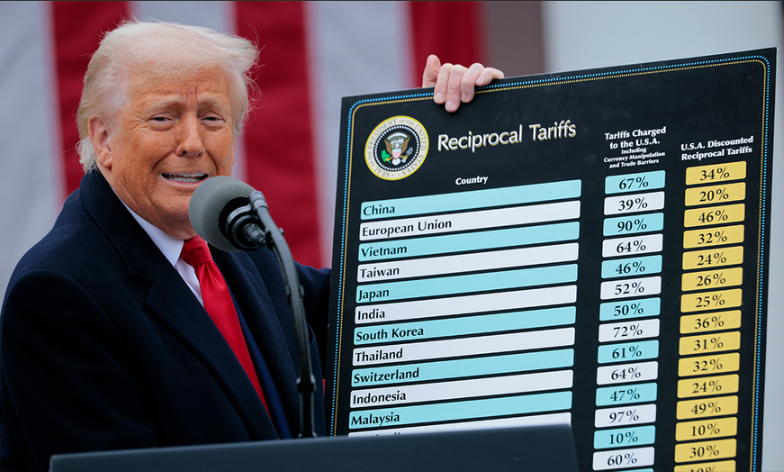
At the time this has been written, Gold has hit all-time highs due to Trump tariffs. This is because investors are looking for a safe haven against potential volatility in the market.
4. Consumer Staples and Utilities ETFs
These sectors cover products and services that people use regardless of economic conditions, such as electricity, food, and hygiene products.
Relevant ETFs:
5. Cash and Money Market Funds
Although returns are low, holding cash offers flexibility and allows investors to take advantage of future buying opportunities.
Options include:
6. Multifamily Real Estate
While real estate overall can be hit during downturns, multifamily residential properties tend to maintain occupancy and income.
Opportunities include:
- REITs like AvalonBay Communities (AVB)
- Real estate crowdfunding platforms like Fundrise or Crowdstreet
7. Structured Notes with Downside Protection
Structured notes are custom investment products offering downside buffers with upside exposure. For example, a note tied to the S&P 500 may offer an 8% annual coupon and a 20% downside buffer.
Platforms that offer structured products:
Ardan – Ardan International Review
These instruments are complex, so understanding the terms and credit risk is essential.
What About Growth Stocks and Technology?
Tech stocks are typically the first to fall in a recession but also among the first to rebound. Historically, this pattern has repeated itself:
| Recession | Tech Peak-to-Trough Decline | 1-Year Post-Trough Return |
| 2000–2002 | -78% (NASDAQ) | +49% |
| 2008–2009 | -55% (NASDAQ) | +65% |
| 2020 | -30% | +87% |
For long-term investors, downturns present buying opportunities in quality growth names like Apple (AAPL), Microsoft (MSFT), and Nvidia (NVDA). There are other stocks that also make up a large part of the American market and fit under the technology category, and they are Alphabet and Meta. Amazon could be classed as a tech stock nowadays due to AWS, but its predominant service is its marketplace.
2025 Macro Environment: Trade Wars and Global Tensions
Trade tensions in 2025 continue to create uncertainty:
- U.S.–China: Conflicts over AI, semiconductor technology, and data privacy.
- EU–U.S.: Disputes over green subsidies and industrial policy.
- India–China: Heightened tariffs and regional rivalries.
Investment Implications:
- Diversify globally: Reduce overreliance on a single region.
- Look for reshoring beneficiaries: North American manufacturing is regaining interest.
- Focus on defence and cybersecurity: Benefiting from geopolitical risk.
- Use commodities tactically: Oil and gold are relevant hedges.
Noteworthy ETFs:
- Invesco Aerospace & Defence ETF (PPA)
- Global X Cybersecurity ETF (BUG)
- SPDR S&P Metals & Mining ETF (XME)
Offshore Investment Opportunities for Global Investors
High-net-worth individuals should consider offshore jurisdictions for greater diversification and access to robust platforms.
Popular choices include:
- Singapore & Switzerland: Secure, regulated, and internationally trusted.
- Dubai International Financial Centre (DIFC): Strong legal framework and tax-efficient.
- UCITS ETFs on Ardan or Novia Global: Transparent, low-fee, globally diversified funds.
Mistakes to Avoid During a Recession
- Panic Selling: Locking in losses prevents recovery. This is where strategy comes in, if you are to sellmake sure it’s a pre-determined strategy rather than just an emotional thought. Daniel Kahneman wrote about loss aversion in his book, and this plays a part in our decision-making.
- Overleveraging: Using debt can magnify losses. Those that leverage hope to maximise the upside potential, linking in with the point above, a strategy is needed to protect you from the downside, which can happen.
- Overconcentration: Diversification remains key. Diversification can take many forms. As you start your journey, diversification might be ETFS or stocks, and as you increase your wealth, you should increase the diversification of your assets. This might be stocks, bonds, property, and businesses.
- Neglecting Liquidity: Especially critical for retirees. Depending on your situation, always having liquid cash is a sensible idea, one to cover living expenses if you need it and the second is to take advantage of opportunities should they arise.
Final Thoughts: Strategy Over Fear
Recessions are an inevitable part of the investment journey, but they don’t have to be disastrous. By staying informed and deploying capital wisely, investors can even emerge stronger.
Here’s what to keep in mind:
- Stick to essential sectors and quality companies.
- Diversify across geographies and asset types.
- Maintain some liquidity for opportunities.
- Consider professional advice and global platforms.
For tailored recession-resilient investment strategies, access to international platforms, and guidance on cost-effective global investing, contact us using the button at the bottom of the page or through my contact page.
Blogs I have written around this topic are:
While cash was a safe haven during the high-inflation peaks of 2023–2024, 2026 is seeing a shift. With the Bank of England and the Fed gradually cutting rates (targeting 3.0%–3.5% by year-end), sitting entirely in cash risks “inflation erosion” and missing out on the bond rally. For expats, the better “safe” play in 2026 is Investment-Grade Bonds. These allow you to lock in higher yields now before rates fall further, providing both a steady income and potential capital gains as bond prices rise.
The “recession-proof” winners of 2026 are companies with durable cash flows and AI-driven cost efficiency. Beyond traditional staples like Healthcare and Utilities, look toward “Phase 2” AI beneficiaries, companies that aren’t just selling AI tools, but are successfully using them to slash operational costs. Additionally, Infrastructure and Green Energy funds remain resilient, backed by heavy government stimulus (like the US ‘Big Beautiful Bill’ and Germany’s new fiscal spending) that continues regardless of broader market volatility.
A US slowdown often leads to a weaker Dollar, which we are starting to see in early 2026. For UK expats, this makes the British Pound (Sterling) look relatively “cheap” and attractive. To protect yourself, use a multi-currency offshore platform (like Swissquote or Invinitive) to rebalance your exposure. If your goals are in GBP but your assets are in USD, 2026 is an opportune time to hedge your currency risk or gradually increase your Sterling-denominated holdings while the Dollar’s dominance faces a cyclical cooling period.