Thinking about retiring in Taiwan? This guide looks at the key residency options, healthcare system, cost of living, best places to live and tax points expats should understand before making the move.
Taiwan is often overlooked by retirees in favour of Thailand, Malaysia and Portugal, yet it offers something many countries struggle to match: world-class healthcare, excellent public transport, a low crime rate, and a high quality of life. With modern cities, beautiful mountains, hot springs and a rich culture, Taiwan can be an excellent destination for those looking for an active retirement.
However, unlike Thailand or Malaysia, Taiwan does not have a dedicated retirement visa, meaning planning your residency is one of the most important considerations.
You can review my residency services for expat. If you have any questions, please contact me using my contact page.
Is Taiwan a Good Place to Retire?
Having visited Taiwan many times over the years and making it a point to return at least once a year, I genuinely think it’s one of Asia’s hidden gems. Whenever people ask me where I’d consider retiring in Asia, most expect me to say Thailand or Japan. While I love both, Taiwan is always near the top of my list.
There’s something about Taiwan that keeps pulling me back. It has all the convenience and infrastructure of a developed country, but without the eye-watering costs that come with living in places like London, Sydney or California. Every time I visit, I leave thinking I could happily live here.
Here are the reasons why.
1. You Get So Much for Your Money
One of the biggest things that stands out to me is the value for money.
Now, Taiwan isn’t the cheapest country in Asia. If your only goal is to spend as little as possible, then Vietnam or Cambodia will probably be cheaper. But I don’t think that’s a fair comparison.
What you’re getting in Taiwan is a developed economy with fantastic infrastructure, world-class healthcare, clean streets, reliable public services and modern cities all at a fraction of what it would cost in most Western countries.
For me, it’s that balance that makes Taiwan so appealing. I don’t mind paying a little more than I would in Vietnam if it means living somewhere that feels incredibly organised, safe and comfortable.
The Bottom Line Comparison (Source: Numbeo)
| Budget Component | 🇹🇼 Taipei | 🇺🇸 New York City | Difference |
| 1-Bed Apartment (City Centre) | $787 | $4,284 | NYC is 444% more expensive |
| Monthly Utilities (Electric, Water, Internet) | $100 | $329 | NYC is 229% more expensive |
| Monthly Public Transit Pass | $37 | $140 | NYC is 278% more expensive |
| Dinner for Two (Mid-range restaurant) | $47 | $150 | NYC is 219% more expensive |
| Gym Membership (Monthly) | $40 | $115 | NYC is 187% more expensive |
2. The Nature Is Incredible
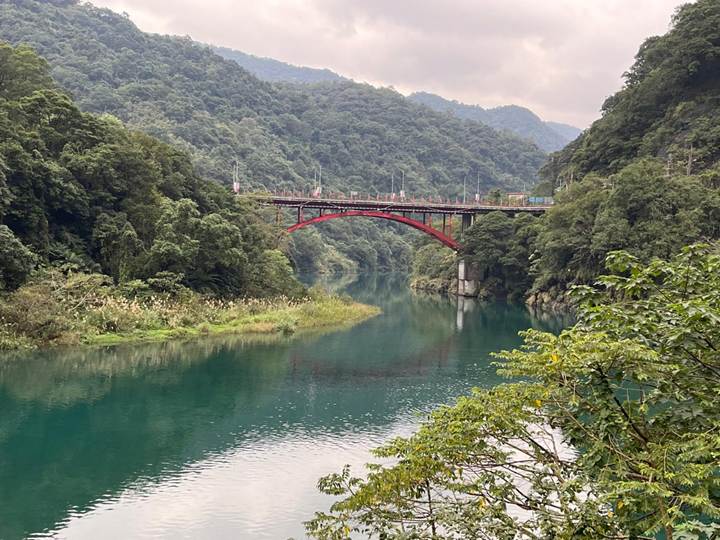
This is probably my favourite thing about Taiwan.
I love being outdoors, and Taiwan makes it unbelievably easy to combine city life with nature.
One morning you can be having coffee in central Taipei, and an hour later you’re hiking through mountains, standing next to waterfalls or relaxing in natural hot springs.
Whenever I’m in Taipei, I almost always take the bus out to Wulai. It’s only about an hour away, yet it feels like you’re in the middle of the wilderness. Surrounded by forests, rivers and mountains, it’s hard to believe you’re still so close to one of Asia’s busiest cities.
That’s something I’ve never really experienced anywhere else. You get all the conveniences of city living without feeling trapped in concrete.
3. Life Is Easy
If you’ve spent much time in East Asia, you’ll know exactly what I mean when I say life just works.
Taiwan takes convenience to another level.
FamilyMart and 7-Eleven are everywhere, literally every few hundred metres, and they are nothing like the convenience stores I grew up with in the UK.
Instead of stale sandwiches and old hot dogs, you can get freshly prepared meals, good coffee, collect parcels, pay bills, print documents, buy train tickets and top up your travel card, all in one place.
It sounds like a small thing, but after a week or two you realise how much smoother everyday life becomes. It’s one of those little details that makes living in Taiwan genuinely enjoyable.
4. You Don’t Need a Car
One thing I really appreciate is how easy it is to get around.
Taipei’s MRT is one of my favourite metro systems anywhere in the world. It’s clean, efficient, inexpensive and incredibly easy to navigate.
Then you’ve got the High-Speed Rail connecting the major cities, excellent local trains, buses that reach even smaller mountain towns, and the brilliant YouBike rental scheme if you fancy cycling around the city.
Most of the time I don’t even think about needing a car.
Whether I’m heading across Taipei, taking a train down the west coast or catching the bus to Wulai for a day’s hiking, getting around is effortless.
5. I’ve Always Felt Safe
This is probably the biggest reason I could see myself living there long term.
I’ve travelled (almost) all over Asia, and Taiwan is one of the few places where I’ve genuinely never felt uncomfortable.
Whether I’m walking around Taipei late in the evening, catching public transport or exploring smaller towns, there’s always a sense of calm about the place.
The people are polite, respectful and incredibly welcoming, and that feeling of safety allows you to enjoy the country properly rather than constantly thinking about your belongings or where you’re walking.
As you get older, I think that’s something you appreciate even more.
My Final Thoughts
Every time I leave Taiwan, I’m already thinking about when I’ll come back.
For me, it offers one of the best balances anywhere in Asia. It’s modern without feeling overwhelming, affordable without compromising on quality, and surrounded by some of the most beautiful scenery you’ll find anywhere.
Is it perfect? No. Summers are hot and humid, and there is no dedicated retirement visa like you will find in Thailand or Malaysia. Taiwan can also be overlooked because of the geopolitical situation, which is understandable. From a tax perspective, it is not as straightforward as Thailand or Malaysia, both of which have territorial tax systems.
However, if you’re looking for somewhere that’s safe, convenient, has fantastic healthcare, amazing public transport and incredible access to nature, Taiwan deserves to be much higher on your list.
After visiting year after year, I can honestly say it’s one of the very few places where I could genuinely picture myself retiring.
Residency Options in Taiwan
One of the biggest differences between Taiwan and countries such as Thailand or Malaysia is that Taiwan does not currently offer a dedicated retirement visa.
At first, this may sound like a disadvantage, but in reality there are several well-established routes that allow foreigners to live in Taiwan long term. Depending on your circumstances, you may qualify through employment, investment, family ties or, eventually, permanent residency.
For many financially independent retirees, consultants and entrepreneurs, these options provide more flexibility than a traditional retirement visa.
Taiwan Employment Gold Card
For professionals, entrepreneurs and remote workers, the Employment Gold Card is arguably Taiwan’s most attractive residency option.
Introduced to attract international talent, the Gold Card combines a work permit, resident visa, Alien Resident Certificate (ARC) and multiple-entry permit into one document. It can be issued for one to three years and renewed if you continue to meet the eligibility requirements.
Unlike a traditional work visa, the Gold Card is not linked to a specific employer. You can work for multiple companies, run your own business, consult for overseas clients or simply manage your own investments without requiring sponsorship from a Taiwanese employer.
Applicants generally qualify through recognised expertise in areas such as:
- Finance
- Technology
- Engineering
- Education
- Science
- Healthcare
- Law
- Architecture
- Culture
- Sport
One of the most common routes is demonstrating a monthly salary of approximately NT$160,000 (around US$5,000) or meeting one of the government’s professional qualification criteria.
For anyone who still works occasionally during retirement, owns an online business or provides consultancy services, I think it’s one of the best residency programmes currently available anywhere in Asia.
Remote Working and the Digital Nomad Lifestyle
Although Taiwan doesn’t currently have a dedicated Digital Nomad Visa, the Employment Gold Card effectively fills that role for many international professionals.
If your income comes from overseas, whether that is consulting, freelancing, running an online business, managing investment portfolios or working remotely for a foreign employer, you can continue your career while enjoying everything Taiwan has to offer.
One of the things I’ve always appreciated is how easy Taiwan makes remote working.
Internet speeds regularly exceed 100–300 Mbps, fibre broadband is widely available, and mobile coverage is excellent. There are countless cafés where it’s perfectly normal to spend several hours working, alongside an increasing number of modern co-working spaces in Taipei, Taichung and Kaohsiung.
Personally, I think Taiwan offers one of the best work-life balances in Asia.
You can spend the morning on video calls in central Taipei and, by the afternoon, be hiking through mountains, relaxing in hot springs or exploring waterfalls.
One of my favourite day trips is taking the bus from Taipei to Wulai. It’s only about an hour away, but once you’re there you’re surrounded by rivers, forests and mountains. It never ceases to amaze me how quickly you can escape the city while still having all the conveniences of a modern capital.
Taiwan’s location is another major advantage. Sitting in the heart of East Asia, it’s an excellent base for regional travel, with short flights to Japan, South Korea, Hong Kong, Vietnam, Thailand, Singapore and the Philippines.
For financially independent retirees who still enjoy occasional consulting or managing overseas businesses, it’s difficult to think of many better places to base yourself.
Residency Through Investment
For higher-net-worth individuals, Taiwan also offers residency through qualifying investments.
Unlike some countries that simply require you to place money on deposit, Taiwan’s investment residency programme is designed to encourage long-term investment into the Taiwanese economy.
There are two principal routes.
Investing in a Taiwanese Business
The most common pathway involves investing at least NT$6 million (approximately US$200,000) into a new or existing Taiwanese business.
This may involve:
- Starting your own company
- Investing in an existing Taiwanese business
- Expanding an overseas business into Taiwan
The investment must represent a genuine commercial activity, and applicants are normally expected to demonstrate that the business is operating rather than existing purely for immigration purposes.
This route is particularly attractive for entrepreneurs looking to establish an Asian base.
Government Bond Investment
For wealthier individuals who don’t necessarily want to run a business, Taiwan also offers a residency pathway through qualifying investments in Taiwanese government bonds.
Historically, this has required an investment of approximately NT$30 million (around US$1 million) in approved government bonds or other qualifying investments, although the exact requirements should always be checked as immigration regulations can change.
What makes this option appealing is that you are not giving the money away.
You’re purchasing government securities that remain your asset while paying interest over the life of the investment. Assuming you continue to satisfy the programme’s residency conditions, you retain ownership of the bonds and receive your capital back when they mature.
Naturally, government bonds are generally lower-risk investments, but that also means returns are typically lower than a diversified equity portfolio.
In my view, this route isn’t really about achieving the highest investment returns, it’s about obtaining residency in one of Asia’s safest, most developed countries while preserving your capital.
For retirees with substantial assets who value stability, it can be a compelling option.
Permanent Residency (APRC)
If you’re planning to make Taiwan your permanent home, your long-term goal will likely be obtaining an Alien Permanent Resident Certificate (APRC).
In many cases, foreigners become eligible after legally residing in Taiwan for five consecutive years, provided they meet the minimum residency requirements during that period and satisfy the relevant financial and legal criteria.
An APRC removes the need to continually renew visas and offers significantly greater freedom.
Permanent residents can live in Taiwan indefinitely, change employers freely, establish businesses and enjoy many of the same practical rights as Taiwanese citizens without becoming citizens themselves.
For anyone considering retirement, the APRC provides invaluable peace of mind and makes long-term financial and lifestyle planning considerably easier.
Which Option Is Best?
For most international retirees and financially independent individuals, the Employment Gold Card is likely to be the most practical route if they still earn overseas income or undertake occasional consulting work.
Entrepreneurs may find the business investment pathway attractive, while wealthier individuals seeking a more passive approach may prefer the government bond investment option.
If you have Taiwanese family connections, the family reunification route is generally the simplest pathway, and for those planning to stay permanently, obtaining an APRC should be the ultimate objective.
While Taiwan doesn’t offer a dedicated retirement visa, I actually see that as less of a drawback than many people assume. The country has created several flexible residency options that suit professionals, entrepreneurs, investors and financially independent retirees. For many people, they provide more freedom than the traditional retirement visas offered elsewhere in Asia.
Healthcare
Taiwan regularly ranks among the best healthcare systems in the world.
Private hospitals are modern, waiting times are generally short, and medical standards are extremely high.
Many doctors speak English, particularly in Taipei.
For retirees, this is one of Taiwan’s biggest advantages.
Best Places to Retire
Taipei
Taipei is the obvious choice for many expats.
It offers:
- Excellent hospitals
- Extensive MRT network
- International restaurants
- Museums
- Parks
- Active expat community
The downside is that Taipei is Taiwan’s most expensive city, particularly compared with the rest of the country.
Taichung
Often described as Taiwan’s most liveable city.
Pros include:
- Lower housing costs
- Pleasant weather
- Relaxed atmosphere
- Excellent cafés
Many retirees find Taichung provides the best balance between cost and quality of life.
Tainan
Taiwan’s oldest city offers:
- Rich history
- Outstanding food
- Lower living costs
- Slower pace of life
Ideal for retirees wanting a more traditional Taiwanese experience.
Kaohsiung
Taiwan’s southern city enjoys:
- Warmer winters
- Lower property prices
- Waterfront lifestyle
- Excellent MRT
Many expats prefer Kaohsiung for its year-round sunshine.
Tax Considerations
Taiwan taxes residents based on the number of days spent in the country and the source of income. Foreign pensions, investment income, and overseas assets may be treated differently depending on your tax residency status and any applicable tax treaties.
Before relocating, it’s worth obtaining professional advice to structure your finances efficiently, particularly if you have investment portfolios, pensions, or property in multiple countries.
Pros
- One of Asia’s best healthcare systems
- Extremely safe
- Excellent public transport
- Friendly locals
- Beautiful mountains and national parks
- Affordable compared with many developed countries
- Outstanding food culture
- Reliable internet
- Modern infrastructure
Cons
- No dedicated retirement visa
- Summers are hot and humid
- Typhoons occur each year
- Mandarin is useful outside major expat areas
- Property prices in Taipei are high
- Air quality can occasionally be poor, particularly in the south during certain seasons
Who Should Consider Taiwan?
Taiwan is particularly well suited to retirees who:
- Value healthcare and personal safety.
- Enjoy city living with easy access to nature.
- Want lower living costs than Japan or Singapore.
- Appreciate hiking, cycling, and an active lifestyle.
- Prefer reliable public transport over driving.
Those seeking a beach-focused retirement, a straightforward retirement visa, or widespread English-speaking communities may find countries such as Thailand or Malaysia easier to navigate.
Final Thoughts
Taiwan is one of Asia’s best-kept secrets for retirement. While its residency pathways require more planning than those of some neighbouring countries, it rewards residents with exceptional healthcare, efficient infrastructure, rich culture and an excellent quality of life.
For retirees who prioritise safety, convenience and an active lifestyle, Taiwan deserves serious consideration. With careful financial and residency planning, it can provide a comfortable and rewarding base for retirement in Asia.
Read my blogs related to this:
If you have any questions, please contact me through my contact page.
Free tools for this topic
All free tools →Free, no sign-up, nothing stored.
This guide is general information, not personal advice. Tax rules can change and their effect depends on your circumstances. Capital at risk.